In 2026, choosing a chemical mixer is less about chasing the newest design and more about matching motion to material. A paddle moving through a thick resin behaves differently from a turbine dispersing pigment in a low-viscosity liquid. That difference affects blend uniformity, processing time, heat transfer, and product quality. Small details matter: tank shape, impeller position, batch size, and whether the ingredients settle or form lumps.
Mixing specialist Paul Tatterson’s published work on industrial mixing emphasizes that equipment selection must fit the process, not just the vessel. That principle is useful when comparing the leading types: propeller mixers for fast circulation, turbine mixers for stronger shear, paddle and anchor mixers for viscous products, and static mixers for continuous flow. Each has limits. An anchor mixer may handle a thick blend well, yet struggle to disperse fine particles without support. It is easy to overlook that.
This guide compares the main chemical mixer designs through practical criteria, including viscosity range, shear level, operating mode, and maintenance needs. It also considers how automation and energy use influence decisions in 2026. No single mixer wins every application. The best choice depends on the material, the required result, and the realities of the plant floor.
Chemical mixers are machines that combine liquids, powders, or other process materials into a consistent blend. Their job is more specific than simply making a tank move. A mixer creates flow, distributes ingredients, and may help disperse particles or transfer heat. The result depends on the material’s viscosity, the batch size, and the desired texture.
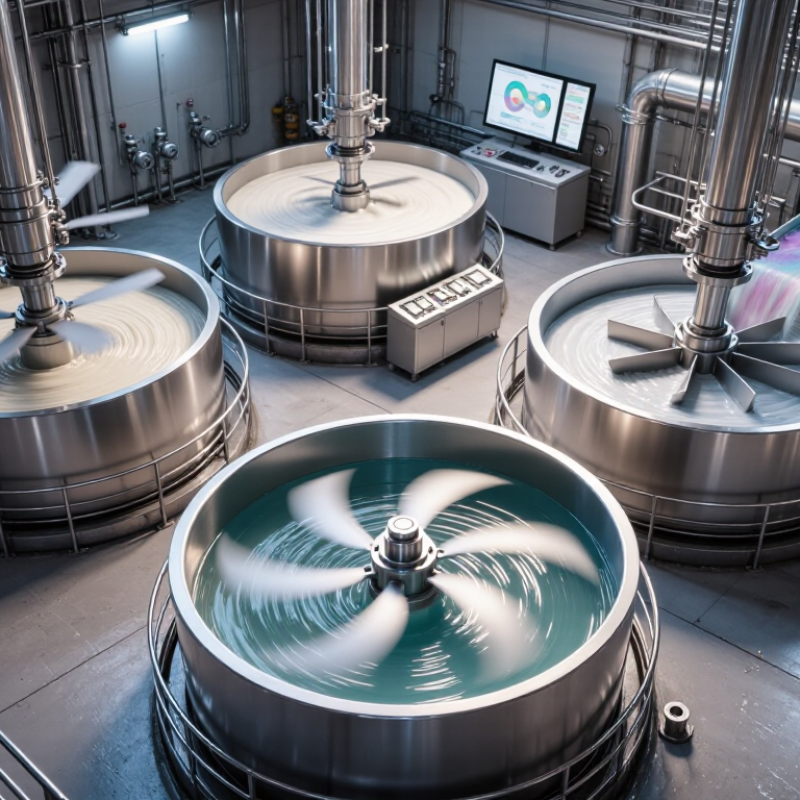
Many mixers use an impeller attached to a rotating shaft. As it turns, the impeller pushes material through the vessel. Propeller-style blades often suit thinner liquids, while broader paddles or anchor-shaped blades move thicker mixtures more gently. High-shear mixers create stronger local forces to break up clumps and disperse fine particles. Not every process needs that intensity. Too much speed can introduce air, generate heat, or damage sensitive ingredients.
Tips: Match the mixer to the material, not just the tank. Check viscosity across the full process, since a blend may thicken as ingredients are added. Observe the surface and sample the batch; a smooth-looking vortex does not always mean uniform mixing. Keep notes on speed, mixing time, and temperature. Small changes matter. Equipment selection still involves judgment, and published specifications may not reflect real operating conditions.
Chemical mixer selection starts with the job, not the vessel size. Propeller mixers create fast axial flow in low-viscosity liquids, useful for dissolving salts or blending solvents. Turbine mixers generate stronger radial flow and turbulence for gas dispersion and moderate emulsification. Paddle and anchor mixers move more gently; their broad blades suit viscous products and help limit stagnant zones near tank walls. Static mixers have no moving parts, using fixed elements inside a pipe to divide and recombine flowing liquids. Simple, but they need steady flow.
For finer droplets or rapid dispersion, rotor-stator high-shear mixers apply intense local force. They can improve emulsification, though heat and energy use need checking. MarketsandMarkets estimated the global industrial mixer market at USD 2.1 billion in 2023 and projected USD 2.7 billion by 2028, a 5.2% annual growth rate. This is a broad market estimate, not proof that one mixer type is best for every chemical process. Viscosity, batch size, solids content, and cleaning needs should guide the choice. A useful trial measures mixing time and product consistency. I would still question results from a single batch.
What Are the Top Chemical Mixer Types in 2026?
How Mixer Designs Differ by Mixing Mechanism
Chemical mixers are not interchangeable. Their geometry controls flow, shear, residence time, and heat transfer. A turbine impeller creates strong radial circulation, useful for liquid blending and gas dispersion. Axial-flow impellers move material vertically, helping tanks with suspended solids. They often require less power, but performance can fall in highly viscous fluids.
High-shear mixers use tight rotor-stator clearances. They break droplets, deagglomerate powders, and support emulsification. Static mixers work differently. Fixed elements divide and recombine streams inside a pipe, with no rotating shaft. This reduces maintenance, although pressure loss can become significant. Ribbon and paddle mixers suit powders, pastes, and other dense materials. Planetary systems provide strong wall scraping, which matters when product buildup threatens consistency.
Market data shows continued demand for this range of designs. Grand View Research estimates the global industrial agitator market will expand at roughly 4.9% annually through 2030. MarketsandMarkets also projects steady growth for industrial mixing equipment through 2028, driven by chemical, food, and pharmaceutical processing. These figures differ because each report defines equipment categories differently. That matters.
In practice, selection should begin with viscosity, solids loading, batch size, and cleaning requirements. A powerful motor cannot fix poor flow patterns. I have seen specifications focus on horsepower while ignoring dead zones near tank walls. That is an avoidable mistake. The best 2026 design may be less aggressive, easier to clean, and better matched to the actual process.
Mixer choice should follow viscosity, shear sensitivity, and whether the process runs in batches or continuously. For thin liquids and routine blending, a baffled tank with an impeller can circulate material through the vessel. A slow anchor or helical agitator suits thick pastes, where wall-scraping helps limit stagnant zones. For emulsions or quick dispersion, a rotor-stator head creates intense local shear. It can also heat sensitive ingredients, so temperature checks matter. For steady, low-viscosity streams, a static mixer blends without moving parts. Not always the right fit.
Solids change the choice. Ribbon or paddle mixers can turn powders and granules, but fragile particles may break under aggressive mixing. Scale matters, too: a lab result may not transfer neatly to a large tank because circulation patterns change.
The International Energy Agency’s 2018 report, The Future of Petrochemicals, estimates that petrochemicals drive 14% of global oil demand and 8% of natural gas demand. That puts process efficiency in perspective. The U.S. Department of Energy’s Bandwidth Study for U.S. Chemical Manufacturing also examines energy-saving opportunities across the sector.
Compare power use, mixing time, and product quality in a representative trial; the best choice is sometimes less obvious than the equipment chart suggests.
What Are the Top Chemical Mixer Types in 2026?
Key Factors for Choosing a Chemical Mixer in 2026
Choosing a mixer starts with the material, not the machine catalog. High-viscosity resin may need a slow, high-torque anchor mixer. A thin liquid blend may suit a propeller mixer, while dispersions can require the stronger shear of a rotor-stator. For continuous production, an inline mixer can reduce tank time. Yet the wrong shear level can damage sensitive ingredients or leave stubborn lumps.
Check viscosity across the full process, not just at room temperature. Then assess batch size, target blend time, heat sensitivity, corrosion risk, and cleaning access. The U.S. Department of Energy’s 2022 Industrial Decarbonization Roadmap reports that energy-intensive industries, including chemicals, account for more than half of U.S. industrial energy use. That is not a mixer-efficiency figure, but it reinforces why motor sizing and operating hours deserve attention. A calculated selection still needs a real-material trial; lab results do not always scale neatly.
Tips: Ask suppliers to test your actual material at likely operating temperatures. Record blend time, motor load, and temperature rise. Small details matter. I would not treat a single successful trial as proof: production batches can behave differently, and that uncertainty should shape the final specification.
Indicative viscosity ranges for common industrial mixer types (Pa·s)
These broad screening ranges overlap and are not equipment limits. Actual suitability depends on flow pattern, shear sensitivity, solids, heat transfer, tank geometry and operating speed. Confirm the design against the process requirements.