Choosing a mixer pump for an industrial project is not just a matter of comparing flow rates. The equipment must suit the material, process, installation, and maintenance conditions it will face. A pump handling thin liquid may not perform well with abrasive slurry or a product containing larger solids. Small details matter.
This guide introduces ten mixer pump manufacturers for global buyers to consider. It is designed as a starting point, not a universal ranking. Compare each supplier’s product range, published performance data, materials of construction, sealing options, and technical support. Ask how the stated capacity was measured, and whether it applies to your actual operating conditions. A catalog figure alone may leave important questions unanswered.
Look closely at the duty point, motor power, wetted components, connection sizes, and available service arrangements. For international projects, delivery timelines, spare-parts access, and clear documentation can also affect the total cost of ownership. These factors may seem less exciting than headline performance. They can matter more after installation.
There is no single best choice. A suitable manufacturer depends on the process and the buyer’s priorities. Some specifications are easy to compare; others need confirmation with the supplier and, where possible, a process engineer. This overview helps narrow the field, but it cannot replace application-specific checks. That limitation is worth keeping in mind.

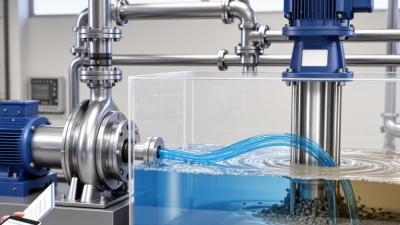
A mixer pump moves liquid while creating circulation that keeps solids suspended. In a tank of sludge, its impeller draws fluid inward and drives it outward, producing a directed flow. That flow can reduce settling near the floor and limit stagnant pockets.
Not merely transfer.
Some units are submerged; others recirculate liquid from outside the tank. Their mixing effect depends on nozzle direction, tank geometry, fluid viscosity, and solids loading.
The U.S. Department of Energy’s Improving Pumping System Performance sourcebook estimates that pumping systems use nearly 20% of global electricity. This figure covers pumping broadly, not mixer pumps alone. It underlines why flow and power should be assessed together. A larger motor does not automatically improve suspension. Poor placement may leave a quiet zone behind a pipe or baffle. Small details matter. Operators should check the actual solids, tank dimensions, and required turnover rate before selecting equipment. A mixer pump may still leave material settled in corners; field observation often reveals what calculations miss.
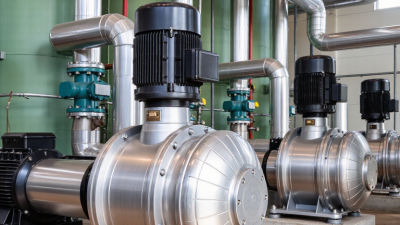
Mixer pumps serve wastewater plants, food processors, mining operations, and chemical facilities. In aeration basins and sludge tanks, recirculating flow helps keep solids suspended and reduces settled deposits. UNESCO’s 2017 World Water Development Report estimated that over 80% of global wastewater was released without adequate treatment. That figure describes a broad infrastructure challenge, not a direct measure of pump demand. Still, reliable mixing supports more consistent treatment processes.
In food production, pumps move viscous mixtures such as sauces or dairy blends, where gentle circulation can limit uneven heating. Mining operators use rugged units to move abrasive slurries through settling and storage tanks. Chemical plants need materials compatible with the fluid and operating temperature. Small details matter. The U.S. EPA’s 2022 Clean Watersheds Needs Survey estimated $630 billion in wastewater and stormwater infrastructure needs over 20 years. That investment includes many systems where mixing and pumping work together. A specification sheet may overlook changing solids levels or tank shape; actual operating conditions can be less tidy. Buyers should check viscosity, particle size, corrosion risk, and cleaning requirements before selecting equipment.
Reference densities of liquids commonly handled in mixer-pump applications. Values are approximate; actual process fluids, temperatures and mixtures vary.
Density is shown in kg/m³. Examples include municipal wastewater, seawater, dairy processing, food-oil handling, chemical processing and fuel handling. This comparison describes representative liquids, not pump capacity or market share.
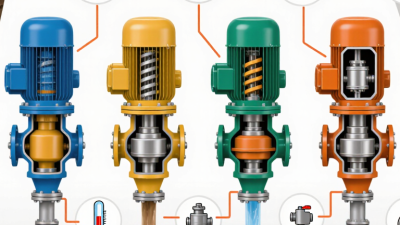
A mixer pump should match the material, tank geometry, and operating schedule—not just a catalogue flow rate. Ask manufacturers how they calculate circulation and mixing performance for your specific setup. A pump handling thin water may behave very differently with a dense slurry. Check impeller design, wetted materials, seal arrangement, and motor protection. Small details matter. Request drawings and a clear duty-point specification before comparing quotations.
Look for evidence from comparable installations, including the fluid type, temperature, and runtime. Test data is useful, but ask how it was measured and whether the conditions resemble yours. Reliable manufacturers can explain maintenance intervals, spare-part availability, and what happens when seals or bearings wear. Response time matters. A polished brochure cannot replace practical support. I would also question unusually precise efficiency promises when no test conditions are provided.
Tips: Share tank dimensions, fluid properties, solids content, and expected operating hours when requesting a proposal. Ask for a written performance guarantee and a recommended spare-parts list. If possible, arrange a witnessed test with representative material. Do not overlook installation access; a pump that performs well can still be difficult to inspect or remove. Some projects miss this point.
Leading mixer pump manufacturers for global buyers should demonstrate more than catalog capacity. Buyers should compare impeller design, solids passage, seal materials, motor efficiency, and continuous-duty ratings against the actual fluid and operating cycle. A pump handling sludge may need a different mixing pattern from one serving a chemical tank. Ask for a duty-point curve, material certificates, and documented factory test results. A neat catalog cannot prove performance in a real installation.
Energy use also deserves attention. The International Energy Agency’s 2011 report, Energy-Efficiency Policy Opportunities for Electric Motor-Driven Systems, estimates that motor-driven systems consume 43–46% of global electricity. That matters. For mixer pumps, efficiency should be checked at the expected operating point, not just at peak motor rating. The UN World Water Development Report 2024 reports that 2.2 billion people lacked safely managed drinking water in 2022, underscoring the need for dependable equipment across water and wastewater projects. Global buyers should also verify local service coverage, spare-part lead times, electrical compatibility, and commissioning support. A low purchase price can still become costly when a mechanical seal fails and replacement parts take weeks to arrive. Factory references help, but site conditions vary; buyers should be cautious about treating one successful installation as proof of universal suitability.
A top-ten list can start a search, but it cannot prove a mixer pump suits your process. Compare suppliers using the same duty point: slurry density, viscosity, solids size, temperature, tank dimensions, and operating hours. Ask for a documented performance curve and material recommendations. Small details matter. A pump tested with clean water may behave differently in abrasive, thick slurry.
Total cost of ownership extends beyond the purchase price. The U.S. Department of Energy’s Improving Pumping System Performance: A Sourcebook for Industry reports that pumping systems account for nearly 20% of global electricity demand and 25–50% of energy use in some industrial facilities. For each proposal, estimate energy use, wear-part replacement, maintenance labor, and downtime over the expected service life. The Pump Life Cycle Costs guide from Europump and the Hydraulic Institute also frames evaluation around these full-life costs. Request service response times, spare-part lead times, commissioning support, and operator training in writing. That is not trivial. A low quote can become expensive when a seal or impeller takes weeks to replace.
Tips: Ask each supplier for references from similar slurry duties, not just similar industries. Compare warranty exclusions and local service coverage. Request a sample maintenance schedule and clarify which wear components are included. Then check the assumptions behind every cost estimate; duty cycles often change, and estimates can be too optimistic.
Use these ten criteria to compare mixer-pump suppliers consistently. The table is a buyer’s evaluation framework, not a verified manufacturer ranking; performance and commercial terms must be confirmed for the specific model, fluid, and duty point.
| No. | Comparison dimension | What to verify with each supplier | Useful evidence or comparison method | Why it affects total cost of ownership |
|---|---|---|---|---|
| 1 | Application and fluid suitability | Confirm the pump is designed for the actual liquid, solids, temperature, pH, and operating conditions. Clarify whether mixing and pumping occur simultaneously and whether the unit is submersible or dry-installed. | Provide the fluid composition, solids size and concentration, temperature range, and required flow and head. Request written confirmation of the proposed operating limits. | A mismatch can cause poor circulation, clogging, accelerated wear, or premature failure. |
| 2 | Duty-point performance | Compare flow rate, total head, motor input, efficiency, and operating range at the required duty point—not just the maximum values in a product brochure. | Request the pump performance curve and check that the duty point falls within the recommended operating region. Confirm whether the stated values apply to the supplied configuration. | Operating away from the suitable range can increase energy use, vibration, and maintenance needs. |
| 3 | Mixing effectiveness | Ask how the supplier assesses circulation, solids suspension, or tank mixing for the specified tank geometry and process. | Compare design calculations, installation guidance, and any application test data for a similar tank and fluid. Check mixer orientation, clearance, and mounting requirements. | Inadequate mixing can create dead zones, uneven solids distribution, or additional process time. |
| 4 | Materials and wear components | Review wetted materials, impeller construction, seals, fasteners, and any wear-resistant options for compatibility with the process fluid and abrasives. | Request a materials list and chemical-compatibility confirmation. Compare the expected inspection and replacement intervals for seals and wear parts under the stated operating conditions. | Material selection influences corrosion resistance, wear life, spare-parts frequency, and downtime. |
| 5 | Motor, electrical, and controls | Check rated voltage and frequency, motor protection, insulation and temperature ratings, starting method, cable requirements, and control-system compatibility. | Match the motor nameplate and wiring documentation to the destination site. Confirm any required hazardous-area or other project-specific approvals before ordering. | Electrical incompatibility or missing approvals can lead to extra engineering, installation cost, or commissioning delays. |
| 6 | Efficiency and energy use | Compare input power at the actual duty point and the expected operating hours. Include any variable-speed operation in the assessment. | Use supplier performance data to estimate annual energy consumption: input power in kW × operating hours per year. Apply the buyer’s local electricity tariff to estimate annual energy cost. | Energy can be a recurring lifecycle cost, especially for equipment that runs continuously or for long operating shifts. |
| 7 | Installation and commissioning support | Confirm the installation scope, lifting and mounting requirements, commissioning assistance, operator training, and responsibility for site work. | Request a written scope of supply, installation drawings, commissioning checklist, and itemized costs for on-site or remote support. | Clear scope and practical commissioning support can reduce installation delays and avoid unplanned contractor costs. |
| 8 | Service coverage and spare parts | Ask where technical support is available, how service requests are handled, which parts are stocked, and how replacement parts are identified and ordered. | Request service contact details, parts lists, recommended critical spares, and quoted delivery lead times to the operating site. | Parts availability and service response affect downtime, inventory carrying cost, and repair duration. |
| 9 | Warranty and documentation | Compare warranty duration, start date, exclusions, required maintenance records, and the process for handling a claim. Confirm the documents supplied with the equipment. | Review the full warranty terms and verify that manuals, certificates, test records, drawings, and maintenance instructions are included where required by the project. | Warranty conditions affect the buyer’s risk exposure; complete documentation supports safe operation and maintainability. |
| 10 | Total cost of ownership and delivery | Compare purchase price, freight, duties, installation, energy, planned maintenance, spare parts, and expected downtime over the same evaluation period. | Use a like-for-like quotation and lifecycle-cost model. Confirm delivery terms, manufacturing lead time, payment terms, and any costs excluded from the quoted price. | A lower purchase price does not necessarily mean a lower lifecycle cost when energy, maintenance, logistics, or downtime are included. |
Buyer’s note: There is no single universally suitable mixer pump. Request comparable technical schedules from each shortlisted supplier and have the selection checked against the actual process conditions, site requirements, and applicable local regulations.