
2026 Best Metering Pump for Global Buyers?
Choosing the best metering pump in 2026 is not a simple brand comparison. A chemical skid may require extreme dosing accuracy, while a water-treatment line may prioritize durability and easy maintenance. Many buyers focus on maximum pressure. That is often the wrong starting point. The real test is stable performance under changing viscosity, temperature, back pressure, and duty cycles.
Recent research supports a more careful approach. MarketsandMarkets’ global dosing pump analysis identifies water treatment, chemicals, pharmaceuticals, and oil and gas as major demand sectors. Grand View Research also highlights automation, process control, and industrial modernization as important market drivers. The U.S. Department of Energy reports that optimized pumping systems can reduce energy use by roughly 20% to 50%. However, that figure does not automatically apply to every metering pump installation. Pipe layout, control settings, and maintenance still matter.
Details matter most.
Pump engineer Dr. Lev Nelik has stated, “A pump does not create flow; it creates pressure.” That principle helps explain why a metering pump must match the entire system, not only the chemical feed rate. This guide compares diaphragm and plunger designs, turndown ratio, wetted materials, calibration methods, pulse control, remote monitoring, and lifecycle cost. It also considers supplier support across regions. Some 2026 market forecasts disagree on growth rates and regional demand. That uncertainty deserves attention. The best choice may not be the newest model. It may be the pump that remains accurate after months of vibration, heat, and imperfect maintenance.
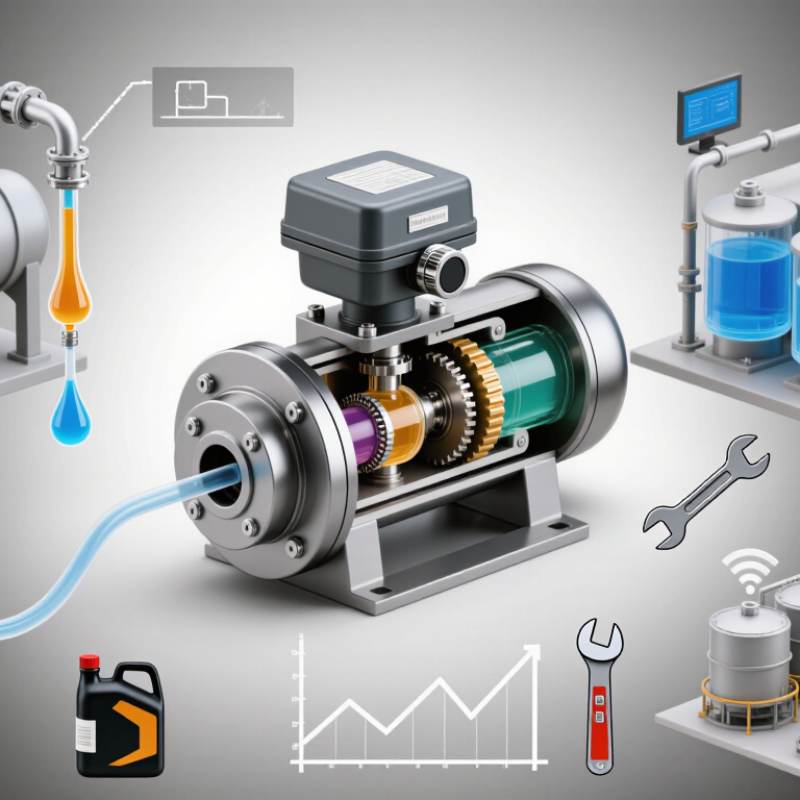
What a Metering Pump Is and How It Delivers Precise Flow
2026 Best Metering Pump for Global Buyers?
What a Metering Pump Is and How It Delivers Precise Flow
A metering pump is a positive-displacement pump designed to move measured liquid volumes. Each diaphragm or plunger stroke delivers a controlled dose. Flow usually depends on stroke length, stroke speed, and liquid conditions. Control starts here.
Unlike a standard transfer pump, a metering pump targets repeatable dosing under changing pressure. Operators may adjust the stroke from a control panel or use a signal from a flow meter. A calibration column then compares the expected volume with the actual discharge. This small check often reveals installation errors.
Precision is never created by the pump alone. Viscosity, temperature, suction piping, air bubbles, and back pressure all affect performance. The U.S. Department of Energy’s Improving Pumping System Performance sourcebook reports that pumping systems can represent about 27% of industrial electricity use. Correct sizing therefore matters for both dosing accuracy and energy control.
A 2026 buyer should examine turndown, materials, maximum pressure, pulsation behavior, and calibration records. API 675 is commonly referenced for controlled-volume reciprocating pumps in demanding process service. Still, a catalogue accuracy figure is not proof of field accuracy. That assumption deserves challenge. A well-tested system with suitable valves and stable suction conditions may outperform a larger pump installed without commissioning.
2026 Best Metering Pump for Global Buyers? - What a Metering Pump Is and How It Delivers Precise Flow
| Pump Type | How It Delivers Measured Flow | Typical Flow Range | Typical Pressure Capability | Typical Steady-State Accuracy | Suitable Fluids | Main Advantages | Key Limitations |
|---|---|---|---|---|---|---|---|
| Diaphragm Metering Pump | A reciprocating diaphragm displaces a calibrated volume during each stroke; stroke length and speed regulate output. | Approximately 0.001–2,000 L/h | Up to approximately 400 bar, depending on design and flow rate | About ±1% to ±2% of rated flow when correctly selected and calibrated | Water treatment chemicals, acids, alkalis, oxidants and corrosive liquids | Good chemical isolation; no dynamic shaft seal in the wetted area; suitable for high pressure | Pulsating flow; diaphragm and check valves require inspection; maximum pressure depends on materials and temperature |
| Plunger or Piston Metering Pump | A reciprocating plunger or piston moves a defined volume through inlet and outlet check valves. | Approximately 0.1–10,000 L/h | Up to approximately 1,000 bar in specialized designs | About ±0.5% to ±1.5% of rated flow under stable conditions | Clean liquids, polymers, boiler chemicals and high-pressure process fluids | High pressure capability; efficient positive-displacement operation; precise dosing | Wetted sealing surfaces may wear; leakage risk is higher than with hydraulically isolated diaphragm designs |
| Peristaltic Metering Pump | A rotating roller compresses flexible tubing and moves fluid through the tube without direct contact with the pump body. | Approximately 0.001–20,000 L/h | Commonly up to 10–15 bar, depending on tubing and pump head | About ±1% to ±5%, depending on tubing condition, back pressure and calibration | Slurries, abrasive fluids, shear-sensitive liquids, viscous products and sanitary fluids | Excellent containment; handles solids well; tubing is the primary wetted component | Tubing fatigue affects accuracy; pressure and temperature are limited by tubing material |
| Progressive Cavity Metering Pump | A rotor turns inside an elastomeric stator, creating sealed cavities that convey a nearly continuous flow. | Approximately 0.01–100,000 L/h | Typically up to 60 bar, depending on the number of stages | About ±1% to ±3% after calibration | Viscous liquids, slurries, polymers, sludge and solids-containing fluids | Low pulsation; good solids handling; suitable for high-viscosity media | Stator wear; must not run dry; elastomer compatibility limits temperature and chemical resistance |
| Gear Metering Pump | Intermeshing gears trap and transfer fixed volumes of fluid per revolution. | Approximately 0.01–10,000 L/h | Typically 10–300 bar, depending on clearance and construction | About ±0.5% to ±2% for stable viscosity and temperature | Clean, lubricating and relatively viscous liquids such as resins, oils and polymers | Continuous flow; compact design; high repeatability with stable fluid properties | Sensitive to abrasive particles; leakage increases with wear and low-viscosity fluids |
| Solenoid-Driven Metering Pump | An electromagnetic actuator moves a diaphragm at a controlled stroke frequency. | Approximately 0.01–100 L/h | Typically up to 20 bar, depending on model and flow setting | About ±1% to ±3% after calibration | Low-to-moderate flow chemical dosing in water and wastewater systems | Compact; simple control; low maintenance; economical for small dosing rates | Limited flow and pressure range; pulsation; performance can change with system back pressure |
| Buying Dimension | What to Check | Why It Matters for Precise Flow |
|---|---|---|
| Required capacity | Normal flow, minimum flow, maximum flow and turndown ratio | A pump operating close to its useful control range is generally easier to calibrate accurately. |
| Discharge pressure | Static pressure, friction losses, injection pressure and pressure fluctuations | Positive-displacement pumps need a suitable pressure rating and correctly selected check valves. |
| Fluid properties | Viscosity, temperature, density, corrosiveness, abrasiveness and suspended solids | These properties affect leakage, valve response, material life, power demand and calibration stability. |
| Control method | Manual adjustment, speed control, stroke control, pulse input, 4–20 mA or fieldbus communication | The control signal should match the process measurement and required response time. |
| Installation conditions | Suction lift, flooded suction, pipe diameter, pulsation dampener, foot valve and calibration column | Poor suction conditions and excessive pulsation can cause air binding, cavitation or unstable dosing. |
| Compliance and service | Electrical certification, pressure rating, hygienic requirements, spare parts and maintenance access | Regulatory fit and serviceability influence safe operation and long-term dosing consistency. |
Related Posts
-
How to Choose the Right Metering Pump?
-
7 Tips for Choosing the Right Pump Metering System
-

5 Unmatched Benefits of Using Chemical Metering Pumps for Precision in Industry
-

7 Essential Features of the Best Chemical Metering Pumps for Global Buyers
-
How to Optimize Your Chemical Metering Pump for Maximum Efficiency
-
Top Chemical Metering Pump Suppliers Worldwide?