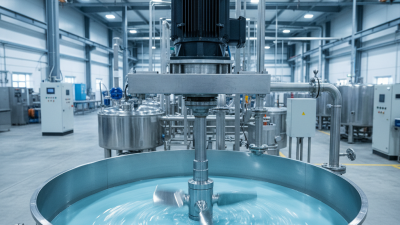
Choosing the 2026 best chemical mixing tank requires more than comparing prices or stainless-steel grades. Global buyers need equipment matched to viscosity, batch volume, temperature, corrosion risk, and cleaning procedures. A tank that performs well with water may struggle with resin, slurry, or high-viscosity additives. The impeller, motor power, shaft seal, baffles, and control system must work as one practical design.
Edward L. Paul, a respected mixing specialist and co-author of Handbook of Industrial Mixing, stated, “Mixing is the process of reducing or eliminating nonuniformities in composition, properties, or temperature.” This principle remains highly relevant. A reliable chemical mixing tank should produce consistent concentration from the top surface to the bottom outlet. It should also limit dead zones, excessive foam, heat buildup, and unnecessary shear.
Real-world selection is rarely perfect. Small details can become expensive problems. A narrow manway may slow maintenance. A weak seal may create repeated production delays. An oversized motor may consume energy without improving blend quality. Buyers should request material certificates, performance data, factory inspection records, and application references. Pilot testing is valuable, especially for unfamiliar formulations.
This guide examines tank construction, agitation performance, automation, sanitation, delivery support, and lifecycle cost. It also considers regional installation conditions and service availability. The cheapest option is not always the safest investment. Sometimes, the best tank is simply the one that keeps working quietly, batch after batch.
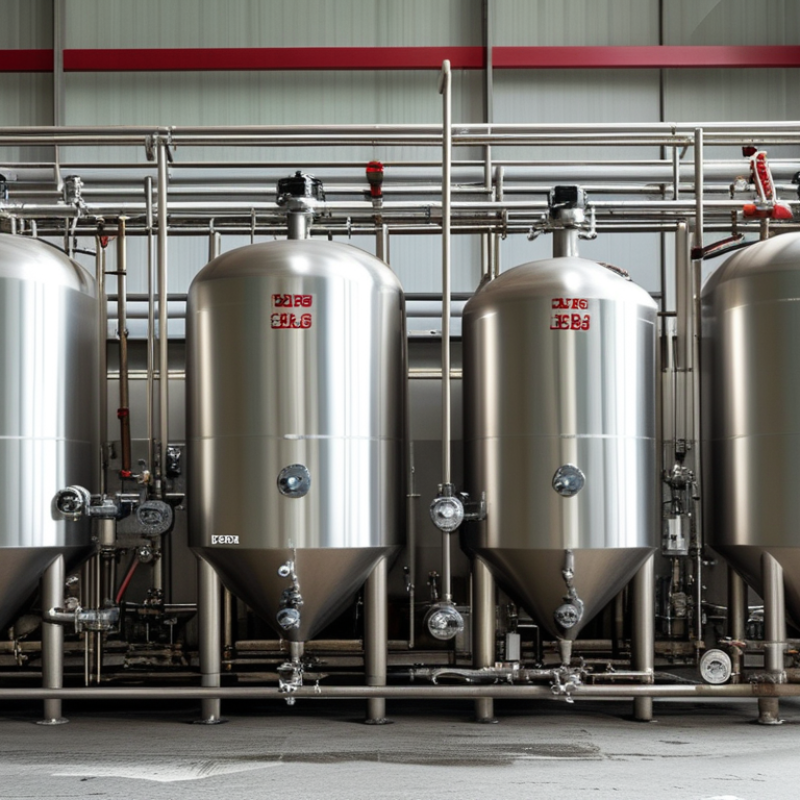
Chemical mixing tanks combine liquids, powders, or gases under controlled conditions. Their basic job is simple: create uniform composition. The operating principle is less simple. An impeller transfers energy through the fluid, producing circulation and local turbulence. Tank geometry, viscosity, density, and batch volume determine the required mixing pattern. A narrow tank may need different circulation than a wide one. Small details matter.
Before selecting a tank in 2026, I would define the process, not the advertised capacity. Record working volume, temperature, pressure, chemical compatibility, and cleaning method. A stainless vessel may suit one formulation but fail with another. Check wetted materials, gasket type, shaft seal, and surface finish. For powders, measure their tendency to float, clump, or settle. A bottom outlet should drain with minimal residue. That point is often overlooked.
Operating speed should rise gradually. Starting too fast can pull air into sensitive liquids or overload the drive. Watch motor load, temperature, vibration, and batch appearance. A clear sample is useful, but it does not prove molecular uniformity. Sampling at different heights gives stronger evidence. In practice, operators sometimes trust a familiar speed too much. That habit deserves review. A reliable specification includes test data, maintenance access, guarding, and documented procedures for the intended process.
2026 Best Chemical Mixing Tank for Global Buyers?
How to Match Tank Materials with Chemical Compatibility Requirements
Choosing a mixing tank starts with the chemical, not the vessel shape. Buyers should check concentration, temperature, contact time, and agitation speed. A liquid that seems mild may become aggressive when heated. Small details matter.
Polyethylene tanks often suit many acids, bases, and water-based solutions at moderate temperatures. Polypropylene handles higher temperatures in selected applications. Stainless steel can provide strength, but chloride-rich liquids may cause pitting or stress corrosion. For highly aggressive chemicals, a fluoropolymer lining may offer stronger resistance. However, the lining, welds, gaskets, and impeller must also be compatible. One overlooked seal can become the weakest point.
I have reviewed tanks where the main shell survived, but the outlet gasket softened within weeks. That failure was avoidable. Request compatibility data for the exact chemical concentration and operating temperature. Do not rely only on a general resistance chart. Ask for immersion-test results when the chemical is unusual or the process runs continuously. Consider permeation, cleaning chemicals, ultraviolet exposure, and sudden temperature changes. Material selection is not always perfect. Laboratory testing may still leave practical questions. A small pilot test can reveal swelling, discoloration, cracking, or unexpected odor transfer before full-scale installation. During procurement, record every assumption, including chemical purity and maximum batch temperature.
How to match tank materials with chemical compatibility requirements
The chart shows typical indicative compatibility ratings for commonly used tank materials: 1 = poor, 3 = conditional, and 5 = excellent. Ratings are based on general chemical-resistance behavior at the listed concentrations. Actual selection must also consider temperature, operating time, agitation, stress, fittings, welds, and the specific resin or alloy grade.
2026 Best Chemical Mixing Tank for Global Buyers?
Key Design Features for Efficient and Safe Chemical Mixing
An effective chemical mixing tank starts with compatibility, not capacity. The vessel material must resist corrosion, swelling, and temperature-driven stress. Stainless steel may suit many liquids, but aggressive chemicals can require engineered linings or specialized alloys. Check the full chemical concentration range.
Impeller geometry controls blending quality and energy use. Axial-flow impellers support suspension, while radial-flow designs improve gas dispersion. Variable-frequency drives allow operators to adjust speed during loading and reaction stages. The IEA’s Energy Efficiency 2023 report identifies industry as responsible for about 37% of global final energy consumption. Small motor-efficiency gains matter.
Safety features require equal attention. Use sealed covers, pressure or vacuum protection, level sensors, emergency stops, and grounded electrical components. The U.S. Chemical Safety and Hazard Investigation Board’s reactive-hazards report reviewed 167 incidents, including 108 fatalities and over 2,500 injuries. Its findings reinforce the need for documented hazard analysis before equipment selection.
CIP-ready surfaces can reduce residue, but they are not automatically hygienic. Dead zones remain a common design weakness. I would also question oversized motors; more power does not guarantee better mixing. Pilot testing with the actual viscosity, density, and heat profile is safer than relying on catalog calculations. A defensible specification should include material certificates, weld inspection records, test procedures, and local compliance requirements.
2026 Best Chemical Mixing Tank for Global Buyers?
Chemical mixing tanks now demand more than corrosion resistance. They need predictable transfer, efficient power use, and measurable process control. Axial-flow impellers suit low-viscosity liquids and gentle blending. Radial-flow designs create stronger shear for dispersions and emulsions. High-shear heads work quickly, but they may increase heat and energy consumption. Static mixers can reduce moving parts, though they require steady flow conditions. A larger impeller is not automatically better.
Power selection should begin with viscosity, density, batch volume, and required turnover time. Variable-frequency drives allow operators to adjust speed instead of wasting energy through throttling. The U.S. Department of Energy reports that motor-driven systems consume about 68% of industrial electricity in the United States. That makes motor efficiency and correct sizing practical purchasing issues. I would not trust a quoted efficiency number alone. Ask for torque data at real operating conditions. The International Energy Agency’s Energy Efficiency 2023 report places industry near 37% of global final energy demand. Small improvements can matter.
Tips: Specify temperature, pH, solids content, and cleaning conditions before comparing tanks. Add temperature, pressure, level, and conductivity sensors where process variation matters. PLC control supports repeatable recipes, while remote monitoring helps detect abnormal load changes. However, automation can become excessive. A simple alarm may outperform a complicated interface during a rushed shift. Request factory test records, calibration details, and maintenance access. Think beyond purchase price.
Representative chemical mixing tank configurations for process selection, preliminary budgeting, and technical comparison
| Tank Configuration | Typical Working Volume | Recommended Materials | Mixing Technology | Typical Impeller Speed | Typical Power Density | Suitable Process Duty | Power System | Control Options | Key Selection Considerations |
|---|---|---|---|---|---|---|---|---|---|
| Standard Batch Agitated Tank | 0.5–50 m³ | 304/316L stainless steel; carbon steel with chemical-resistant lining; polypropylene or polyethylene for selected low-temperature duties | Top-entry axial-flow hydrofoil or pitched-blade impeller with baffles | 30–180 rpm | 0.1–1.0 kW/m³ | Blending, dilution, pH adjustment, neutralization, and general liquid-liquid mixing | Three-phase induction motor with helical-bevel or inline gearbox; optional variable-frequency drive | Speed control, temperature monitoring, level switch, load-cell weighing, and batch recipe control | Good all-purpose configuration; impeller diameter, baffle design, and turnover rate should be matched to viscosity and blend time |
| High-Shear Dispersion Tank | 0.1–15 m³ | 316L stainless steel; abrasion-resistant lining where solids are present; sanitary surface finish when required | Rotor-stator mixer or saw-tooth disperser, often combined with an anchor or sweep agitator | 500–3,600 rpm | 2–15 kW/m³ | Pigment dispersion, polymer incorporation, powder wetting, emulsification, and deagglomeration | High-speed motor with VFD; separate low-speed drive may be used for viscous bulk circulation | Speed ramping, motor load monitoring, temperature interlock, vacuum control, and automated powder-addition sequence | Provides strong local shear but can increase heat generation, air entrainment, and power consumption |
| Viscous-Product Anchor Tank | 1–100 m³ | 316L stainless steel or carbon steel with compatible internal coating; jacketed construction for thermal processing | Low-speed anchor or gate agitator with wall scrapers; optional helical ribbon for improved axial movement | 5–60 rpm | 0.2–3.0 kW/m³ | Resins, adhesives, gels, concentrated detergents, creams, and high-viscosity chemical formulations | High-torque geared motor with VFD; torque limiter recommended for start-up protection | Torque monitoring, jacket temperature control, viscosity trend estimation, slow-start logic, and high-level shutdown | Requires careful torque calculation at minimum temperature and maximum viscosity; wall clearance affects heat transfer and mixing quality |
| Gas-Liquid Contact Tank | 1–80 m³ | 316L stainless steel, duplex stainless steel, or lined carbon steel depending on gas and liquid corrosivity | Radial-flow turbine, gas-inducing impeller, or sparged axial-flow impeller with demister where needed | 80–600 rpm | 0.5–4.0 kW/m³ | Gas absorption, oxidation, hydrogenation support, aeration, stripping, and reaction gas dispersion | Motor and gearbox sized for gas-free and gas-loaded conditions; VFD for gas-rate changes | Gas flow control, dissolved-gas or oxygen measurement, pressure control, foam detection, and emergency venting | Design must consider gas holdup, mass-transfer performance, foaming, pressure rating, and hazardous-area requirements |
| Continuous Inline Mixing System | Throughput: 0.5–100 m³/h | 316L stainless steel, duplex stainless steel, fluoropolymer-lined steel, or engineered thermoplastic piping | Static mixer, dynamic inline mixer, or staged injection mixer installed in a process pipeline | Static: no drive; dynamic: 500–3,600 rpm | Pressure-drop based; commonly 0.5–3 bar across static sections | Continuous dilution, additive dosing, rapid neutralization, water treatment, and final-product blending | Metering pumps, positive-displacement pumps, or dynamic mixer motor with VFD | Flow-ratio control, mass-flow measurement, conductivity or pH feedback, pressure monitoring, and PLC sequencing | Compact and scalable, but residence time, pressure drop, pump compatibility, and control-loop response must be verified |
| Vacuum Mixing and Deaeration Tank | 0.5–30 m³ | 316L stainless steel or lined carbon steel; vessel shell designed for external pressure and vacuum cycling | Anchor, planetary, or dual-shaft mixer with scraper system and controlled vacuum | 5–150 rpm | 0.5–6.0 kW/m³ | Air-sensitive formulations, viscous liquids, defoaming, moisture removal, and bubble-free chemical products | High-torque geared drive with VFD; vacuum pump selected for vapor load and solvent compatibility | Vacuum regulation, absolute pressure transmitter, condenser temperature control, torque monitoring, and solvent-vapor interlock | Needs vacuum-rated construction, suitable seals, vapor-condensation capacity, and protection against product boiling or solvent loss |
| Corrosion-Resistant Lined Tank | 1–200 m³ | Glass-lined steel, fluoropolymer-lined steel, rubber-lined steel, or compatible polymer construction | Top-entry axial-flow or hydrofoil agitator; magnetic-drive option for critical containment duties | 30–250 rpm | 0.1–2.0 kW/m³ | Acid and alkali storage with agitation, corrosive reaction support, crystallization, and aggressive chemical blending | Gear motor with VFD; sealed or magnetically coupled drive for reduced emissions risk | Leak detection, temperature and pressure monitoring, agitator vibration sensing, level control, and containment alarms | Lining compatibility, thermal-shock resistance, inspection access, shaft-seal selection, and repairability are critical |
| Sanitary Hygienic Mixing Tank | 0.2–50 m³ | 316L stainless steel with polished product-contact surfaces; elastomers selected for chemical and temperature compatibility | Low-shear axial-flow impeller, side-entry mixer, or bottom-entry mixer with hygienic drainability | 20–300 rpm | 0.1–1.5 kW/m³ | High-purity chemicals, specialty formulations, water-treatment reagents, and contamination-sensitive production | Hygienic motor and gearbox with VFD; servo positioning available for automated dosing or indexing | CIP sequence control, conductivity confirmation, temperature logging, batch traceability, and sanitary valve automation | Prioritize drainability, cleanability, dead-leg reduction, surface finish, gasket compatibility, and documented material traceability |
| Engineering basis: Values are representative preliminary-selection ranges rather than guaranteed design limits. Final sizing should be confirmed using viscosity, density, solids loading, gas rate, heat-transfer duty, residence time, corrosion data, hazardous-area classification, and required blend performance. | |||||||||
Global purchasing starts with process evidence, not catalogue appearance. Cefic’s Facts and Figures 2024 reports global chemical sales of about €5.2 trillion in 2023. That scale increases pressure on uptime, traceability, and safe material selection. Buyers should define viscosity, temperature, density, batch volume, shear sensitivity, and cleaning method before comparing tanks. A polished vessel can still fail with the wrong impeller. I have seen specifications overlook drainability and sampling access. That mistake becomes expensive after installation.
Compliance must match the destination and the process. Ask for material certificates, weld procedures, pressure calculations, surface-finish records, and factory acceptance tests. For pressurized service, relevant pressure-equipment rules may apply. Hazardous-area installations may also require suitable electrical and explosion-protection assessments. Do not accept “international standard” as evidence. Require a clause-by-clause compliance matrix. The ISO Survey 2023 recorded more than one million ISO 9001 certificates worldwide, yet certification alone does not prove mixing performance. Request test records, corrective-action history, references for similar fluids, and documented change control.
Tips: Compare total ownership cost, not only the purchase price. Check spare-part lead times, local service capacity, inspection access, and warranty exclusions. A useful supplier scorecard can assign 30% to technical fit, 25% to compliance evidence, 20% to quality systems, 15% to lifecycle support, and 10% to delivery risk. Adjust those weights when the liquid is abrasive, heat-sensitive, or highly viscous. The perfect weighting does not exist. Revisit it after pilot testing.