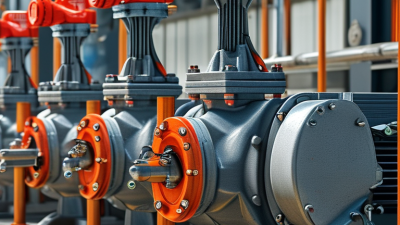
China has become a major manufacturing base for process equipment, including the chemical mixing tank. Its suppliers serve coatings, water treatment, pharmaceuticals, food chemicals, and specialty materials. However, identifying the “top” manufacturer requires more than comparing factory photos or export claims.
Grand View Research reports continued growth in the global industrial mixing equipment market, driven by chemical processing, pharmaceuticals, and wastewater treatment. MarketsandMarkets also identifies automation, energy efficiency, and process consistency as important purchasing factors. These reports use different market definitions, so their figures should not be treated as perfectly comparable. That limitation matters.
A reliable supplier should demonstrate tank volume, wetted materials, mixer power, impeller design, surface finish, and temperature capability. Ask for test records, weld inspection details, material certificates, and documented batch results. A stainless-steel vessel may look excellent, yet poor baffle placement can create dead zones around the bottom outlet. Small design details matter.
Mixing specialist James Y. Oldshue is widely associated with the warning, “Mixing is the most misunderstood of all chemical engineering unit operations.” His point remains practical. A larger motor does not automatically produce better blending. Viscosity, density, shear sensitivity, gas entrainment, and residence time must be evaluated together.
This guide will examine leading China-based chemical mixing tank manufacturers through engineering evidence, production experience, customization ability, quality control, and after-sales support. It will not treat every ranking as absolute. Supplier performance can change by project, material, and application. That is an uncomfortable truth, but it is more useful than a polished list without technical proof.
What Are Chemical Mixing Tanks?
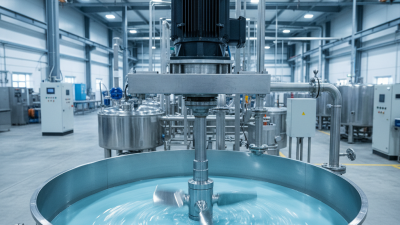
Chemical mixing tanks are engineered vessels that combine liquids, powders, gases, or heat-sensitive materials. They usually include an agitator, motor, baffles, sampling ports, and temperature controls. Materials range from stainless steel to lined carbon steel, depending on corrosion risk. The correct design depends on viscosity, density, shear sensitivity, batch size, and cleaning requirements.
The scale is substantial. Cefic’s 2024 Facts and Figures reports global chemical sales of about €5.2 trillion in 2023. That demand supports mixing equipment across water treatment, coatings, polymers, food ingredients, and specialty chemicals. MarketsandMarkets estimates the industrial mixing market will grow from roughly USD 2.6 billion in 2023 to USD 3.4 billion by 2028. These figures explain why Chinese manufacturers receive global attention.
A practical buyer should inspect weld quality, shaft alignment, seal selection, and agitator testing records. Ask for material certificates and documented factory acceptance tests. A polished tank can still mix poorly. That is the uncomfortable part. An undersized motor may stall with viscous products, while excessive speed can damage sensitive materials. Hygienic applications also require smooth internal surfaces and reliable cleaning validation. ISO 9001 certification supports process control, but it does not prove every tank suits your chemistry. Independent engineering review remains valuable.
Chemical mixing tanks are vessels designed to blend liquids, suspend solids, or support chemical reactions under controlled conditions. Tank construction materials are selected according to chemical compatibility, temperature, pressure, corrosion resistance, and mixing requirements.
The chart compares representative room-temperature densities of common tank materials. Stainless steel and carbon steel provide high mechanical strength, while polypropylene and high-density polyethylene are lightweight options often used for compatible corrosive chemicals.
How to Assess China’s Leading Chemical Mixing Tank Manufacturers
Assessing a chemical mixing tank manufacturer requires more than comparing prices. Review the tank’s materials, weld quality, surface finish, and agitator design. Request drawings showing capacity, operating temperature, pressure, and mixing speed. A capable manufacturer should explain why each specification suits your process. Ask for material certificates, weld inspection records, and documented quality procedures. Factory visits can reveal practical details, such as clean assembly areas, traceable components, and realistic production schedules. Remote audits help, but they cannot show everything.
Tips: Compare at least three suppliers. Check references from similar applications. Request a sample inspection plan before ordering. Confirm testing for leakage, vibration, rotation, and emergency shutdown functions. Clarify installation support, spare parts, warranty terms, and response times. Do not accept vague promises about corrosion resistance. Demand test data for your chemicals and operating conditions.
A strong supplier also asks difficult questions about viscosity, solids content, cleaning methods, and batch consistency. This shows process knowledge, not just selling ability. Review the engineering team’s experience with scale-up and custom agitator selection. However, no assessment is perfect. A polished factory tour may hide weak subcontractor control. Documents may also look complete while practical communication remains slow. Use staged payments, clear acceptance criteria, and witnessed factory testing where appropriate. Keep every technical change in writing. Small details matter, especially when a tank arrives with an unsuitable nozzle or an access port that technicians cannot reach.
Choosing among China’s top chemical mixing tank manufacturers requires more than comparing prices. Material selection affects safety, service life, and product purity. Stainless steel 304 suits many general chemical processes. Stainless steel 316L performs better against chlorides and stronger corrosion. For aggressive media, manufacturers may offer lined steel, plastic tanks, or special alloys. Confirm the material certificate before production.
Design must match the process, not just the tank volume. A top-entry agitator works well for uniform blending. An anchor impeller helps with viscous products near the tank wall. High-shear mixers disperse powders and break up agglomerates. Tank geometry also matters. A dished bottom improves drainage, while a conical bottom can reduce residue. Small details matter.
Customization may include heating jackets, cooling coils, vacuum ports, load cells, spray balls, and dust-tight covers. Ask for mixing speed, motor power, viscosity range, operating temperature, and pressure limits. These figures guide the shaft and impeller design. A practical factory should provide drawings, welding records, pressure tests, and surface-finish data. Factory inspections can reveal uneven welds or poorly fitted seals. This part is sometimes overlooked. However, not every customized feature improves performance. Extra ports can complicate cleaning. Recheck the process before approving the final design.
| Evaluation Dimension | Common Options in China | Typical Technical Range or Standard | Best-Fit Chemical Applications | Key Customization Options | Selection Considerations |
|---|---|---|---|---|---|
| Tank Material | 304 stainless steel, 316L stainless steel, carbon steel with lining, polypropylene, polyethylene, and glass-lined steel | 316L is commonly selected for higher corrosion resistance and sanitary service; plastic tanks are generally used for lower-temperature, atmospheric-pressure duties | Acids, alkalis, solvents, water-treatment chemicals, specialty chemicals, and pharmaceutical intermediates | Material grade, internal surface finish, lining thickness, corrosion allowance, and material certificates | Confirm chemical compatibility, operating temperature, concentration, chloride exposure, and cleaning method before finalizing the material |
| Tank Configuration | Vertical cylindrical, horizontal cylindrical, conical-bottom, dished-bottom, and rectangular designs | Vertical cylindrical tanks are widely used because they provide efficient mixing and effective drainage | Liquid blending, neutralization, suspension, dissolution, and storage with agitation | Tank diameter-to-height ratio, bottom geometry, support legs, load cells, manways, and lifting lugs | Select the shape according to viscosity, available floor space, required drainage, solids content, and installation height |
| Operating Pressure | Atmospheric, low-pressure, vacuum-capable, or pressure-rated construction | Atmospheric tanks are suitable for open or vented processes; pressure and vacuum service requires engineered shell, cover, and safety protection | Open blending, vacuum deaeration, pressurized reactions, and closed solvent processing | Pressure rating, vacuum rating, reinforced covers, rupture discs, pressure gauges, and certified relief valves | Define both maximum positive pressure and maximum vacuum, since they impose different mechanical design requirements |
| Agitator Type | Propeller, pitched-blade turbine, hydrofoil, paddle, anchor, helical ribbon, and high-shear rotor-stator | Propellers and hydrofoils suit low-viscosity liquids; anchors and helical ribbons suit higher-viscosity materials | Blending, heat-transfer enhancement, solids suspension, emulsification, and high-shear dispersion | Impeller diameter, number of impellers, shaft length, baffles, seal type, variable-speed drive, and retractable shaft design | Agitator selection depends on viscosity, density difference, solid particle size, mixing time, and shear sensitivity |
| Drive System | Geared motor, direct-drive motor, variable-frequency drive, and explosion-protected motor | Variable-speed control allows adjustment of tip speed and power input during different process stages | Batch blending, controlled reaction, crystallization, dispersion, and temperature-sensitive processing | Motor power, speed range, gearbox ratio, inverter, brake, coupling, and hazardous-area motor classification | Motor sizing should consider start-up torque, maximum viscosity, batch volume, impeller load, and continuous-duty requirements |
| Sealing Arrangement | Packed gland, single mechanical seal, double mechanical seal, and magnetic drive | Mechanical seals provide better containment than packing for many closed chemical processes; magnetic drives eliminate a rotating shaft penetration | Solvents, toxic liquids, volatile chemicals, sterile processes, and leakage-sensitive production | Seal face materials, elastomer type, flush system, barrier fluid system, cooling arrangement, and seal monitoring | Match seal materials to chemical compatibility, temperature, pressure, solids content, and emission-control requirements |
| Heating and Cooling | External jacket, half-pipe coil, internal coil, electric heating, and thermal-fluid circulation | Jacketed tanks provide indirect heat transfer while maintaining product containment; heat-transfer area is sized from the process duty | Polymer processing, crystallization, dissolution, neutralization, temperature-controlled blending, and reaction processes | Jacket zone layout, design pressure, insulation, temperature sensors, steam or thermal-oil connections, and cooling-water connections | Evaluate heat-transfer coefficient, batch cycle time, product viscosity, fouling tendency, and allowable product temperature |
| Internal Surface Finish | Standard fabricated finish, polished stainless steel, electropolished surface, rubber lining, and fluoropolymer lining | Smoother surfaces reduce product retention and make cleaning easier; required roughness depends on hygiene and process specifications | Pharmaceuticals, food additives, cosmetics, fine chemicals, and contamination-sensitive products | Surface roughness target, weld treatment, passivation, electropolishing, lining inspection, and product-contact certification | Specify internal finish separately from external finish and identify all product-contact parts, including agitator, baffles, and nozzles |
| Bottom and Discharge Design | Flat, dished, cone, flush-bottom, side-discharge, and bottom-discharge arrangements | Conical or dished bottoms generally improve drainage compared with a flat bottom, especially when solids or viscous liquids are present | Suspensions, slurries, crystallized products, viscous liquids, and clean-in-place processes | Outlet diameter, valve type, flush connection, bottom agitator, slope, drainability, and dead-leg reduction | Verify that the outlet can handle the product viscosity and particle size without excessive blockage or sediment accumulation |
| Instrumentation | Temperature probe, level transmitter, pressure gauge, pH probe, sampling valve, conductivity sensor, and load cells | Instrument selection is based on chemical compatibility, measurement range, accuracy, process connection, and cleaning requirements | Automated batching, reaction monitoring, neutralization, dosing, and quality-controlled production | Sensor type, connection size, control panel, PLC integration, alarms, remote monitoring, and data logging | Place sensors where they remain representative of the mixed bulk and are protected from direct impeller impact or excessive coating |
| Safety Features | Vent filter, flame arrestor, relief valve, rupture disc, grounding, emergency stop, and interlocked access cover | Safety equipment must be selected according to chemical hazards, pressure, temperature, flammability, and applicable local regulations | Flammable solvents, corrosive chemicals, toxic materials, exothermic reactions, and enclosed production systems | Hazardous-area electrical components, nitrogen blanketing, containment trays, level alarms, lockable covers, and safety interlocks | Complete a process hazard review and specify ventilation, grounding, overpressure protection, and operator access controls |
| Fabrication and Compliance Documentation | Welding procedures, material certificates, dimensional drawings, pressure tests, surface inspection, and factory acceptance testing | Documentation requirements vary by process, destination, pressure category, and industry; pressure equipment may require applicable regional codes | Industrial chemicals, water treatment, pharmaceuticals, food-related chemicals, and export projects | Inspection and test plan, weld maps, passivation records, calibration certificates, coating reports, and operating manuals | Request drawings and technical documentation before production so that materials, nozzles, instruments, and acceptance criteria are traceable |
| Common Customization Scope | Tank volume, working level, materials, agitator, heating or cooling, lining, instrumentation, nozzles, and automation | Working volume is normally lower than total volume to allow headspace for mixing, thermal expansion, foam, and gas release | Custom batch processes, pilot systems, production lines, and integrated chemical processing skids | Custom dimensions, multi-stage mixing, CIP or SIP provisions, weighing systems, platforms, piping, control cabinets, and skid mounting | Provide process data including batch size, density, viscosity, solids concentration, temperature, pressure, mixing time, and chemical composition |
Note: Final tank material, pressure rating, agitator power, seal arrangement, and safety configuration should be confirmed through a process and mechanical design review.
Choosing among China’s top chemical mixing tank manufacturers requires more than comparing prices. Quality should be visible in documents, welds, and test records. The ISO Survey 2022 recorded 1,265,216 ISO 9001 certificates worldwide, showing how common certified quality systems have become. However, certification alone is not proof. Buyers should request material certificates, weld procedure qualifications, dimensional reports, and factory acceptance test records.
Reliable manufacturers usually design tanks around the process, not a standard catalogue. Key details include viscosity, solids content, temperature, corrosion risk, and required mixing time. Stainless steel grades should match the chemical service. Surface finishing may include polished internal welds, while pressure-rated vessels should follow ASME BPVC Section VIII requirements. The manufacturing line should also show CNC cutting, controlled welding, passivation, leak testing, and traceable inspection points. I would inspect the agitator shaft alignment carefully; small errors can create vibration, seal wear, and uneven blending. That risk is easy to underestimate.
Tips: Ask for a sample quality dossier before placing an order. Check whether inspection records identify heat numbers and operators. Request a factory video or independent inspection when visiting is impossible. Do not rely only on impressive production photos. A capable supplier should explain why its impeller, baffles, motor size, and tank geometry fit your process. Some specifications remain uncertain until pilot testing, so allow room for technical revision.
Choosing the right Chinese chemical mixing tank supplier requires more than comparing prices. Start with your process details: working volume, liquid viscosity, operating temperature, pressure, and required mixing speed. Ask how the supplier selects tank materials, shaft seals, impellers, and control systems. A capable manufacturer should explain these choices clearly, not hide behind technical jargon.
Request drawings, material certificates, weld inspection records, and test procedures before placing an order. Check whether the factory can perform pressure testing, surface inspection, and trial operation. An online meeting is useful, but a video tour may reveal more. Look for organized welding areas, traceable components, and technicians who answer practical questions. Independent inspections can also reduce uncertainty.
Do not judge reliability from a polished website alone. Review similar project experience, delivery records, warranty terms, spare-part support, and response times. Clarify packaging, installation guidance, payment stages, and acceptance standards in writing. A very low quotation deserves careful questioning. It may reflect efficient production, or missing accessories and weaker materials.
No checklist is perfect. I would still allow time for technical revisions, because early assumptions often fail during installation. Choose a supplier that documents changes, admits limitations, and offers workable solutions. Clear communication is often more valuable than a confident sales promise.