In the realm of water management solutions, the efficiency of pump systems plays a pivotal role in optimizing resource utilization and reducing operational costs. According to recent industry reports, the global pump market is projected to reach USD 105.67 billion by 2026, growing at a CAGR of 3.59% from 2021. This growth is driven by an increasing demand for efficient water distribution systems, particularly in agricultural, municipal, and industrial applications. As water scarcity becomes a pressing global challenge, the adoption of advanced pump systems capable of operating at peak efficiency is of paramount importance for sustainable water management.
The integration of smart technologies and automation in pump systems not only enhances performance but also allows for real-time monitoring and control, leading to significant improvements in energy efficiency. A study by the Hydraulic Institute indicates that energy-efficient pump systems can reduce energy consumption by up to 30%, which is crucial for both environmental sustainability and cost-saving measures. Therefore, this article explores the top pump systems that exemplify innovation and efficiency, providing insights into how these solutions can significantly contribute to effective water management strategies.
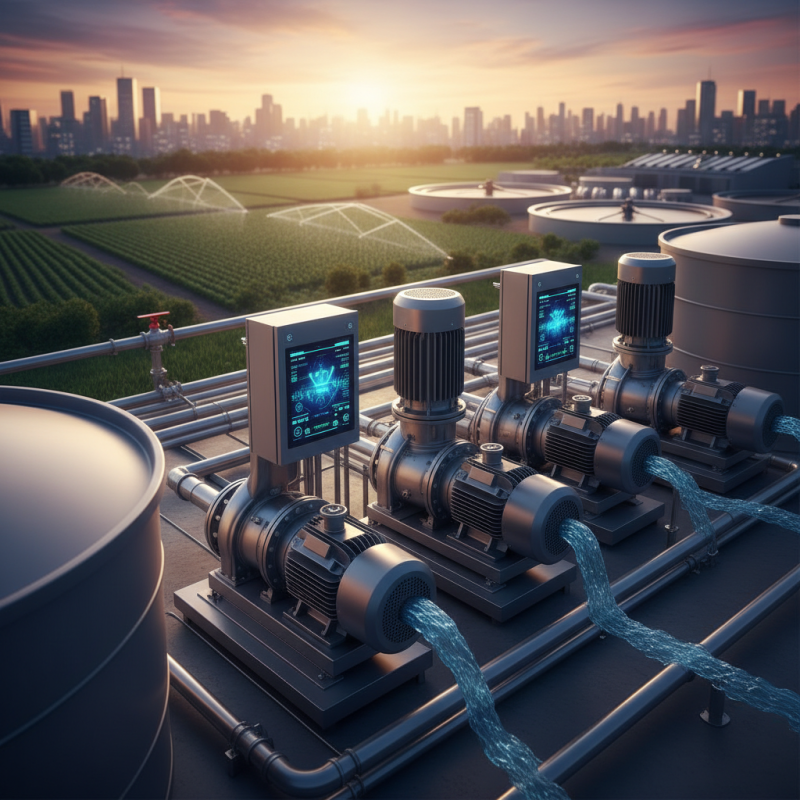
Efficient water management is a pivotal component in addressing the growing concerns of water scarcity and resource mismanagement. The implementation of advanced pump systems plays a crucial role in optimizing water distribution and usage across various sectors. According to the Global Water Intelligence 2023 report, it is estimated that smart pump systems can improve water management efficiencies by up to 30%, significantly reducing operational costs and energy consumption. These systems employ sophisticated technologies such as variable frequency drives (VFDs) and real-time monitoring solutions, which adjust pumping activities based on dynamic demand and operational conditions.
Furthermore, the American Society of Civil Engineers in their Infrastructure Report Card highlights that outdated pumping infrastructure contributes to nearly 25% of unaccounted-for water, costing municipalities millions annually. By integrating modern pump systems into existing frameworks, municipalities can enhance their water management strategies and minimize losses. Utilizing energy-efficient pumps not only conserves valuable resources but also helps in achieving sustainability goals outlined in numerous environmental regulatory frameworks. By prioritizing the deployment of efficient pump systems, industries and governments can ensure a more resilient and sustainable approach to water management for future generations.
| Pump Type | Application | Flow Rate (m³/h) | Efficiency (%) | Power Consumption (kW) |
|---|---|---|---|---|
| Centrifugal Pump | General Water Supply | 10 - 500 | 70 - 90 | 1.5 - 250 |
| Submersible Pump | Drainage | 5 - 300 | 75 - 85 | 0.5 - 150 |
| Diaphragm Pump | Chemical Transfer | 1 - 100 | 60 - 80 | 0.2 - 10 |
| Screw Pump | Wastewater Treatment | 20 - 400 | 80 - 95 | 5 - 150 |
| Positive Displacement Pump | High Viscosity Fluids | 1 - 50 | 65 - 85 | 0.3 - 25 |
Pump systems play a crucial role in efficient water management solutions across various industries. There are several types of pump systems designed to meet diverse applications, each tailored to specific requirements. Centrifugal pumps, for instance, are widely used for their ability to move water quickly and efficiently. They are ideal for applications such as irrigation, water supply, and drainage, where high flow rates are required. Their design allows for smooth operation, making them suitable for both residential and industrial uses.
Positive displacement pumps, on the other hand, are known for their capability to handle thick fluids and maintain a consistent flow rate regardless of pressure changes. These pumps are often employed in applications such as wastewater treatment, chemical processing, and food production. Their unique mechanics allow them to draw in fluid and push it out in a more controlled manner, providing reliability in situations where varying pressures may be a concern. Each type of pump system brings its strengths to the table, contributing to more effective water management solutions tailored to the needs of different processes and environments.
Efficient pump systems play a crucial role in effective water management solutions, contributing to energy conservation and operational reliability. Key features of these systems include high efficiency ratings, customizable performance settings, and integrated monitoring technology.
High-efficiency pumps can significantly reduce energy consumption, while customizable settings allow for adjustments based on specific water needs. Additionally, integrated monitoring helps in real-time performance assessments, enabling timely maintenance and minimizing downtime.
Tips for selecting the right pump system include evaluating the total dynamic head (TDH) requirements of your application and considering the fluid characteristics you are working with. Ensuring compatibility with your water source and system design is essential for optimal performance. Moreover, look for systems with energy-efficient motor options to create long-term savings on electricity costs.
Another important feature is the system's ability to provide redundancy and reliability. A reliable pump system should have the capability to operate under various conditions without failure. Ensuring that your pump system includes backup options, such as a secondary pump in case of a malfunction, can safeguard against potential disruptions in water supply. By paying attention to these key features, you can enhance the efficiency of your water management solution.
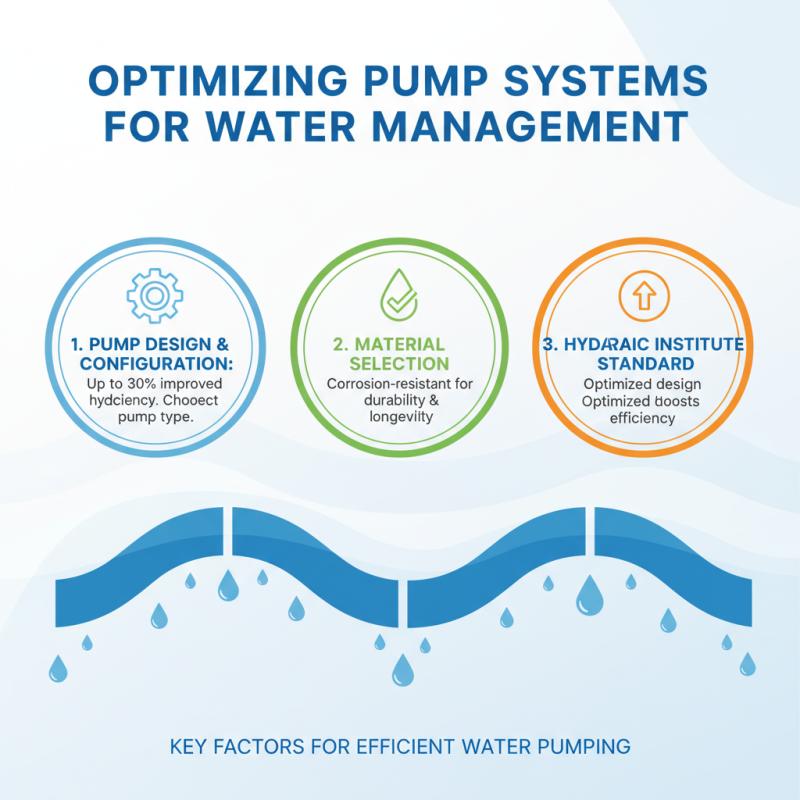
When evaluating pump systems for efficient water management, several crucial factors come into play that directly influence their performance. One of the most significant aspects is the design and configuration of the pump itself, which can greatly affect hydraulic efficiency. According to the Hydraulic Institute, an optimized pump design can improve overall efficiency by up to 30%, highlighting the importance of selecting the right type of pump for specific applications. Moreover, the selection of materials used in pumps also plays a critical role, as corrosion-resistant materials can enhance durability and longevity, which is essential for maintaining efficiency over time.
Another key factor is the operating conditions under which the pump system functions. Factors such as fluid characteristics, temperature, and inlet conditions must be closely monitored. The American Society of Mechanical Engineers (ASME) reports that improper conditions can lead to a drop in pump efficiency by as much as 20%, ultimately affecting the overall water management strategy. Regular maintenance and monitoring, including adjusting the pump to match varying operational requirements, can significantly reduce energy consumption and prolong the lifespan of the pumping system. As energy costs continue to rise, optimizing these performance factors becomes increasingly critical in achieving sustainable water management solutions.
Innovations in pump technology are pivotal for advancing water management solutions, particularly in addressing the challenges posed by climate change and population growth. Modern pump systems now incorporate sophisticated sensors and automation technologies, resulting in improved efficiency and reduced energy consumption. These smart systems can adapt to varying flow rates and pressure requirements, ensuring optimal performance while minimizing waste. With predictive maintenance capabilities, they also mitigate the risk of system failures, thereby enhancing reliability and extending the lifespan of pumping infrastructure.
Additionally, advancements in materials and design are fostering the development of pumps that can operate in diverse environments, including extreme conditions. New techniques in fluid dynamics and hydraulic modeling are enabling engineers to create more effective and robust designs, allowing pumps to handle higher capacities with less energy. Furthermore, the integration of renewable energy sources, such as solar and wind power, into pump systems is not only reducing operational costs but also promoting sustainable water management practices. As innovations continue to evolve, the future of pump technology holds promise for increasingly efficient and environmentally friendly water management solutions.
This bar chart illustrates the efficiency percentages of various pump systems currently used for water management solutions. Submersible pumps and centrifugal pumps lead with the highest efficiency, showcasing the ongoing innovations in pump technology designed to optimize water management practices.