China Top 10 Diaphragm Metering Pump Suppliers

Selecting reliable equipment suppliers requires more than comparing catalog prices. This guide examines China’s top 10 diaphragm metering pump suppliers through practical purchasing criteria. These include dosing accuracy, pressure stability, diaphragm materials, pump-head construction, control options, and service responsiveness. A diaphragm metering pump may handle corrosive chemicals, wastewater additives, boiler treatment agents, or pharmaceutical fluids. Each application demands careful material and performance choices.

The review considers factory experience, production capability, quality inspection, export history, and technical support. It also looks at flow-rate ranges, calibration methods, leak prevention, spare-parts availability, and customization capacity. Product documentation matters. So does communication after installation. A supplier may offer an impressive specification sheet, yet field performance can depend on calibration, piping design, and operator training. That detail is easy to overlook.

No list is perfect. Supplier data changes, and advertised capabilities may differ between models. Buyers should verify test reports, certifications, references, and warranty terms directly. Sample testing remains valuable when fluids are abrasive, viscous, or temperature-sensitive. Clear questions often reveal more than polished marketing language. This introduction provides a practical framework for comparing manufacturers without treating ranking as a final decision. Readers can use it to identify suitable partners, reduce equipment risks, and build a more dependable dosing system.
China Top 10 Diaphragm Metering Pump Suppliers

China’s Diaphragm Metering Pump Market: 2024 Capacity and Demand Metrics

China’s diaphragm metering pump market entered 2024 with strong process-industry demand. Mordor Intelligence valued the global metering pump market at about USD 7.4 billion in 2024. It projects a 5.5% annual growth rate through 2030. Diaphragm designs remain important where chemical resistance and leak control matter.

China’s capacity is difficult to measure precisely. Public statistics rarely separate diaphragm metering pumps from other pump categories. This is a data weakness. However, China’s National Bureau of Statistics reported 9.0% growth in manufacturing investment during 2024. Chemical manufacturing investment also expanded, supporting demand for dosing equipment. Research reports from Grand View Research identify Asia-Pacific as the fastest-growing regional market. Chinese production therefore serves domestic water treatment, chemical processing, and environmental projects. Capacity is not only factory volume. It includes testing benches, spare-diaphragm inventory, and calibration technicians.

Tips: Compare rated flow with real operating flow. A pump running near its maximum rate may lose accuracy. Ask for test records, material certificates, and pulse-dampener data. Check performance at low stroke lengths. That detail is often overlooked. Buyers should also separate installed capacity from usable capacity. A supplier may list annual output, yet lack enough service staff during peak orders. Demand forecasts remain imperfect, especially when construction projects pause. Use three-year purchasing data, not one optimistic forecast.

China’s Diaphragm Metering Pump Market: 2024 Capacity and Demand Metrics

Estimated 2024 manufacturing capacity and annual demand by major end-use sector, measured in thousand pumps.

China’s water-treatment and chemical-processing sectors represent the largest demand centers. Estimated capacity exceeds demand in every segment, indicating available production headroom in 2024. Figures are industry-level estimates and exclude company-specific disclosures, laboratory pumps, and non-metering diaphragm pumps.

Operating Principles: 0.1–1,000 L/h Flow and Pressures up to 400 bar

A diaphragm metering pump uses a moving diaphragm to displace a measured volume of liquid. The diaphragm separates the process fluid from the drive mechanism. Suction and discharge check valves control each stroke. This design supports dosing rates from 0.1 to 1,000 L/h, while specialized units can reach pressures up to 400 bar. Actual performance depends on liquid viscosity, temperature, stroke frequency, and valve condition.

A 2024 MarketsandMarkets report valued the global water and wastewater treatment market at approximately USD 342 billion in 2024. It projects growth to about USD 472 billion by 2029. A separate 2024 Fortune Business Insights report also identifies industrial pumping as a growing equipment segment. These figures explain rising demand for accurate chemical dosing in compact treatment systems. API 675 provides a useful reference for controlled-volume metering pump design and testing.

The details matter.

During commissioning, operators should verify calibration at the real backpressure, not only at zero pressure. A pump rated for 400 bar may deliver less flow when the liquid contains gas or abrasive solids. Pulsation dampeners can reduce pipe vibration, but they cannot correct poor valve selection. I would also question any supplier curve showing perfect accuracy across the full 0.1–1,000 L/h range. That claim often needs closer inspection. Temperature changes, diaphragm fatigue, and installation errors can shift the actual dose. A short field test can reveal more than a polished brochure.

Selection Standards: API 675, ISO 9001, and ±1% Metering Accuracy

China Top 10 Diaphragm Metering Pump Suppliers

When evaluating Chinese diaphragm metering pump suppliers, API 675 should guide the technical review. This standard addresses controlled-volume pumps, including capacity control, repeatability, and pressure performance. Ask for documented flow tests at actual operating pressure, not only at water service. A calibration column, stable suction piping, and a properly sized pulsation dampener can reveal practical performance.

ISO 9001 certification shows that a supplier operates a documented quality management system. However, certification alone is not proof of consistent manufacturing. Review material certificates, diaphragm inspection records, pump traceability, and final test procedures. Reliable suppliers should explain how they control machining tolerances, assembly torque, leakage checks, and spare-part compatibility. Factory audits and witnessed testing provide stronger evidence than polished brochures.

The ±1% metering accuracy requirement needs careful definition. Is it based on full stroke, a fixed setpoint, or the complete turndown range? Ask for repeatability data, calibration conditions, and uncertainty details. In field projects, temperature, viscosity, suction pressure, and operator adjustments can shift results. I have seen pumps meet ±1% during testing but perform less steadily after installation. That gap deserves attention. A short commissioning trial may expose it. Be demanding, but remain realistic.

China’s Top 10 Suppliers: Products, Industries, Certifications, and Coverage

China Top 10 Diaphragm Metering Pump Suppliers

China’s leading diaphragm metering pump suppliers serve water treatment, chemical processing, mining, food production, and pharmaceutical plants. Their product ranges often include mechanical and hydraulic diaphragm pumps, automatic controls, skid systems, and corrosion-resistant options. Common materials include stainless steel, PVC, PVDF, and PTFE-lined components. Flow rates may range from laboratory dosing to large industrial systems.

Certifications help, but they do not tell the whole story. Many suppliers present ISO 9001 quality systems, CE documentation, pressure-test records, and material certificates. Buyers should check whether certificates cover the exact pump model. Technical support also differs. Some suppliers provide selection calculations, factory testing, spare parts, and remote commissioning. Export coverage may include Southeast Asia, Europe, the Middle East, Africa, and the Americas. However, delivery times and local service can vary sharply. This part needs closer checking.

Tips: Ask for a performance curve at your actual pressure and chemical concentration. Request diaphragm life data, noise readings, packing details, and a clear warranty scope. Confirm voltage, connection standards, control signals, and spare-part availability before ordering. A video inspection can reveal useful details, although it cannot replace an independent test. Do not choose only by price. A cheaper pump may consume more maintenance time.

Supplier Comparison: Flow Range, Pressure, Materials, Service, and Cost

China Top 10 Diaphragm Metering Pump Suppliers

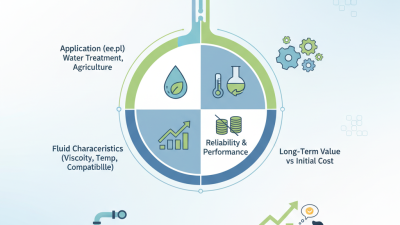
Comparing China’s top diaphragm metering pump suppliers requires more than checking catalog prices. Flow range is a practical starting point. Many suppliers cover laboratory dosing, water treatment, and chemical processing applications. Buyers should verify minimum stable flow, maximum capacity, and adjustment accuracy under real operating conditions. A pump rated at 100 liters per hour may perform differently at low stroke speeds. Small differences matter.

Pressure capability must match the process, not only the pump label. Ask for continuous working pressure, relief protection, and test conditions. Materials also deserve close attention. PTFE diaphragms, ceramic valves, stainless steel heads, and PVC components suit different fluids. Compatibility depends on concentration, temperature, and particle content. One material rarely fits every application. This is where supplier engineering experience becomes visible.

Service can include drawing support, spare diaphragm availability, commissioning guidance, and response time. Request clear evidence, such as sample test records and installation references. Cost comparison should include controls, calibration, packaging, spare parts, and energy use. The lowest quotation may become expensive after repeated maintenance. This comparison is not perfect, because published data can omit noise, pulsation, or long-term accuracy. Buyers should test shortlisted pumps with their actual fluid whenever possible. A written warranty helps, but practical support matters more.