
China Top 10 3 Pump Manufacturers for Global Buyers
Choosing a 3 pump manufacturer is not just a price comparison. Buyers need equipment that fits the fluid, duty cycle, installation space, and maintenance plan. A pump selected from a catalog may look suitable, yet perform poorly when actual flow, pressure, or liquid conditions differ. Small details matter.
This guide introduces ten Chinese manufacturers for global buyers to research. It is a starting point, not a guarantee of quality or a fixed ranking. Company capabilities can change, and public information may not tell the whole story. Verify specifications directly with each supplier. Ask for performance curves, material options, test records, warranty terms, and clear delivery schedules. For demanding applications, request references or arrange an independent inspection where practical.
Compare more than quoted capacity. Check whether the proposed configuration matches your operating point, including expected flow and total head. Review motor efficiency, seal design, spare-parts availability, and service response in your region. Also confirm which certifications apply to the specific product and destination; a company-level claim may not cover every model. These checks take time. They can prevent expensive mismatches later.
Some suppliers may offer broad product ranges, while others focus on particular pump types or industries. That difference is easy to miss. Treat every claim as something to verify, and use the same questions for each manufacturer. The strongest choice is the one that can explain its selection clearly, provide consistent documentation, and support the equipment after shipment—not simply promise the lowest price.
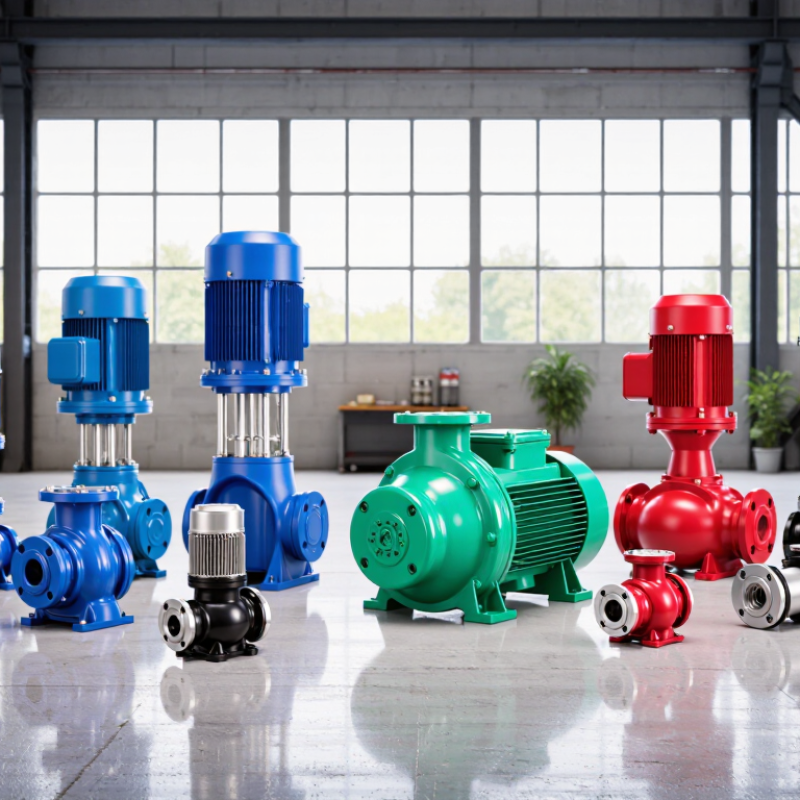
Understanding Three-Pump Systems and Their Industrial Applications
Three-pump systems use three pumps to meet changing flow and pressure demands. In many installations, two pumps operate while the third remains on standby. Some systems instead run all three pumps at variable speeds. The control strategy depends on process needs, not pump count alone.
These arrangements support water supply, HVAC circulation, irrigation, and industrial cooling. For example, a plant may need steady cooling during normal shifts, then higher flow when several machines run together. Staging pumps can reduce unnecessary energy use and provide backup capacity. But poor sequencing can cause pressure swings, frequent starts, or uneven wear. A design that looks efficient on paper may behave differently with long pipe runs or dirty strainers. That deserves a site check.
Tips: Confirm required flow and head across low and peak demand. Check motor starting limits, control logic, and standby changeover. Keep suction lines short and inspect strainers regularly. Record pressure and vibration readings after commissioning; small changes can reveal a developing fault. For global buyers, request clear performance curves and operating limits. Ask how the supplier verifies test results. Data matters.
China Top 10 3 Pump Manufacturers for Global Buyers - Understanding Three-Pump Systems and Their Industrial Applications
Three-pump systems commonly use two duty pumps and one standby pump, three pumps operating in parallel, or staged pumps serving separate duties. The examples below describe application and system-selection considerations—not a ranking of manufacturers or guaranteed equipment specifications.
| No. | Industrial Application | Typical Three-Pump Arrangement | Common Pump Type | Key Selection Considerations | Typical Control Approach |
|---|---|---|---|---|---|
| 1 | Municipal water supply and distribution | Two duty pumps with one standby pump; alternatively, three pumps in parallel to match changing demand. | Horizontal or vertical multistage centrifugal pumps | Required flow and pressure, water quality, efficiency across the operating range, materials, and local drinking-water requirements. | Pressure sensors with variable-frequency drives (VFDs); automatic standby changeover where required. |
| 2 | Building and district water boosting | Three parallel pumps, commonly staged according to building demand; a standby arrangement may be used for critical service. | Vertical multistage centrifugal pumps | Peak and minimum demand, pressure-zone requirements, noise, footprint, expansion capacity, and protection against low inlet pressure. | Pressure-based pump staging, VFD control, and alternation of lead duty to balance running hours. |
| 3 | Wastewater collection and treatment | Two duty pumps plus one standby in a wet well, or three pumps staged to accommodate variable inflow. | Submersible or dry-installed sewage pumps | Solids passage, clogging risk, pump submergence, corrosion resistance, wet-well geometry, and maintenance access. | Level switches or level transmitters; alternating duty sequence and high-level alarm. |
| 4 | Industrial process-water circulation | Three parallel pumps for variable process demand, or two duty and one standby for continuity of service. | End-suction or inline centrifugal pumps | Liquid temperature and chemistry, required flow and head, seal selection, operating point, and process uptime requirements. | Flow or pressure control with pump staging; interlocks linked to process conditions. |
| 5 | Boiler-feed and hot-water service | Two duty pumps with one standby are often considered where uninterrupted feed is important; exact configuration depends on plant design. | Multistage centrifugal pumps designed for the specified temperature and pressure | System pressure, water temperature, suction conditions, cavitation margin, materials, and applicable boiler or plant codes. | Feed-level or pressure control with automatic standby start; independent protective trips as required by the design. |
| 6 | Cooling-water systems | Three pumps in parallel for variable cooling demand, or two duty and one standby for critical cooling loops. | Horizontal split-case, end-suction, or vertical pumps | Cooling load, water temperature, fouling potential, corrosion, pump efficiency, and coordination with heat exchangers. | Temperature, flow, or differential-pressure control; staged operation or VFD speed control. |
| 7 | Mining and slurry handling | Three pumps may be arranged as parallel units for capacity or as staged units in a transfer system; the layout depends on slurry duty. | Heavy-duty slurry or process pumps | Solids concentration, particle size and abrasiveness, slurry density, pipe velocity, wear life, and ease of replacing wear parts. | Flow monitoring and operating limits selected to reduce settling, blockage, and excessive wear. |
| 8 | Agricultural irrigation and drainage | Three parallel pumps can serve changing irrigation demand; a standby unit can support essential drainage duties. | End-suction, axial-flow, or submersible pumps, selected for the required duty | Water source, seasonal flow, total dynamic head, suspended solids, energy supply, and accessibility for maintenance. | Manual or automated staging based on pressure, flow, water level, or irrigation-zone demand. |
| 9 | Fire-protection water supply | Fire-pump arrangements are governed by applicable fire codes and the approved system design; three pumps should not be assumed to be a universal standard configuration. | Listed fire pumps of the type specified by the system design | Local code and approval requirements, rated flow and pressure, water supply reliability, controller configuration, and acceptance testing. | Dedicated fire-pump controllers and code-compliant automatic starting; control design must follow the authority having jurisdiction. |
| 10 | Desalination and reverse-osmosis pretreatment | Three pumps may serve parallel pretreatment trains, feed stages, or duty/standby roles; high-pressure duties require separate system evaluation. | Process centrifugal pumps; high-pressure pumps where required by the membrane process | Feed-water salinity and contaminants, pressure requirements, material compatibility, filtration, seal design, and membrane operating limits. | Flow and pressure monitoring with staged control; safeguards coordinated with filtration and membrane equipment. |
Related Posts
-
China Top 3 Pump Brands for Quality and Performance?
-
How to Choose the Best 3 Pump System for Your Needs?
-

How to Choose the Right Industrial Pumps for Your Manufacturing Needs
-

Innovative Tank Mixer Applications Across Various Industries
-
How to Choose the Right Commercial Pump for Your Business Needs
-

China Top Chemical Tanks Innovations and Market Trends?