
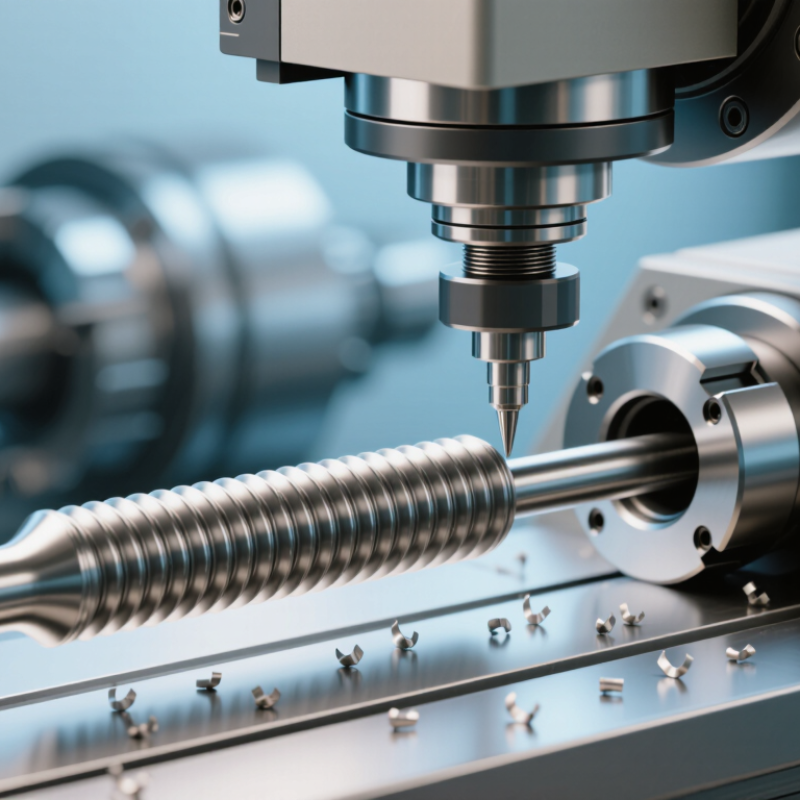
Titanium Properties That Affect Bone Screw Turning
Titanium behaves differently from many stainless steels during Swiss turning. Its low thermal conductivity traps heat near the cutting zone. That heat stays concentrated around the insert and workpiece. Cutting edges can wear quickly when speeds, feeds, or coolant delivery are poorly matched.
Titanium also has strong chemical reactivity at cutting temperatures. A worn tool may encourage built-up material and damage the thread profile. Sharp, positive-rake tooling helps reduce rubbing and cutting pressure. However, excessive edge sharpness can weaken the insert. This balance deserves careful testing. Small changes matter.
The material’s elasticity creates springback after cutting. Internal threads may shift slightly from the expected size, especially with slender parts. Titanium can also work-harden when the tool dwells or follows an unstable path. Keep the tool engaged with a consistent feed. Avoid repeated rubbing passes. Chip control remains critical because long, hot chips can scratch finished surfaces or interrupt automatic production.
A rigid guide bushing supports accuracy near the head and thread. Controlled coolant should reach the actual cutting edge, not only the outside of the part. Conservative trial cuts often reveal more than aggressive settings. Record tool life, burr formation, surface texture, and thread measurements together. One overlooked detail is workholding pressure. Too much pressure can distort a thin screw before inspection. Process validation should use the final alloy, geometry, and sterilization requirements, because laboratory results may not represent production behavior.