How to Choose a Diaphragm Chemical Metering Pump in 2026?
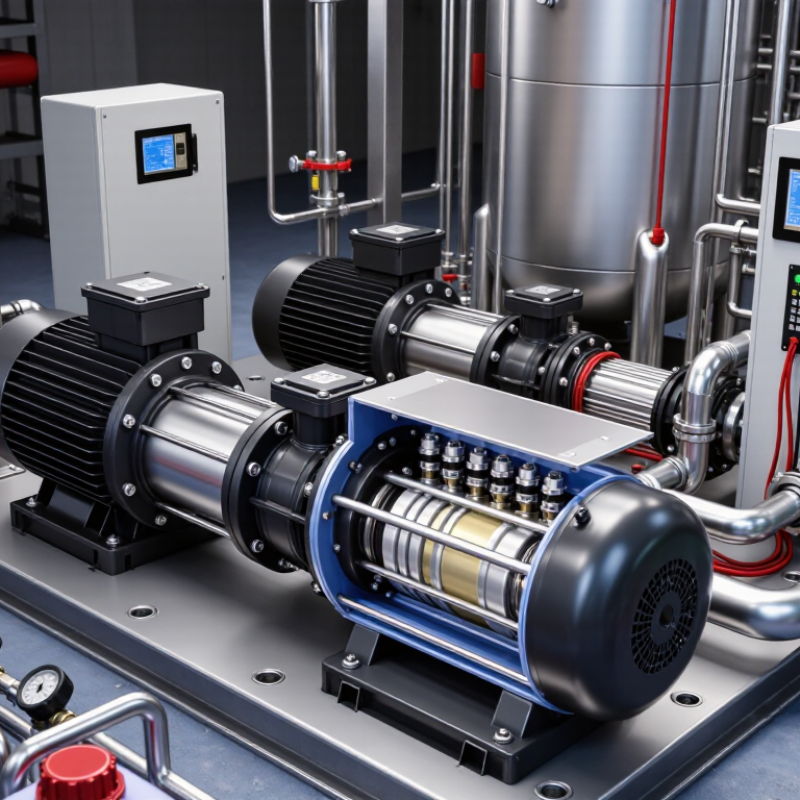
Choosing a diaphragm chemical metering pump in 2026 requires more than comparing flow rates and prices. The correct choice protects dosing accuracy, operator safety, and process stability. A pump may look suitable on paper, yet fail when exposed to crystallizing chemicals, high viscosity, pulsation, or frequent start-stop cycles.
Reliability engineer Heinz P. Bloch offers a useful reminder: “Reliability begins with correct equipment selection.” This principle applies directly to every diaphragm chemical metering pump installation. Begin with the chemical’s concentration, temperature, viscosity, vapor pressure, and compatibility with wetted materials. Then confirm the required flow range, discharge pressure, turndown ratio, and control signal. Do not ignore the suction line. A long, narrow pipe can create problems before the pump ever reaches its rated capacity.
Field experience also matters. Observe the actual installation, not only the specification sheet. Check whether the pump can maintain a steady dose at the lowest operating rate. Review calibration results at several points, such as 10%, 50%, and 100% capacity. A smooth test at full output proves very little.
A neat spreadsheet can still mislead.
In 2026, smart controls, remote monitoring, leak detection, and improved diaphragm materials can strengthen system performance. However, advanced features cannot correct poor chemical selection or incorrect piping. Ask manufacturers for verified performance curves, material compatibility data, maintenance intervals, and documented test conditions. Independent technical review is valuable when the chemical is aggressive or the process is safety-critical. The best pump is not always the largest or most connected model. It is the one that delivers the required dose consistently, under real operating conditions, with room for honest uncertainty.
Define the Chemical Metering Task and Required Flow Range
How to Choose a Diaphragm Chemical Metering Pump in 2026?
Define the Chemical Metering Task and Required Flow Range
Start with the chemical, not the pump. Record concentration, temperature, viscosity, specific gravity, and compatibility risks. Then define the process target: pH correction, disinfection, corrosion control, or nutrient dosing. The U.S. EPA’s 2022 Guidelines for Water Reuse stress that dosage, contact time, and water quality must be verified together. A pump selected from flow alone may fail quietly.
Calculate minimum, normal, and maximum demand. For example, a process requiring 12 liters per hour normally may need 2 L/h during low load and 30 L/h during peak demand. Include dilution water and calibration uncertainty. FAO’s AQUASTAT data reports that agriculture uses about 70% of global freshwater withdrawals, showing why dosing accuracy matters in large treatment systems. My early mistake was sizing for the average rate. It looked efficient, but peak demand exposed the weakness.
Tips: Measure real flow during commissioning. Use a graduated cylinder and stopwatch. Check the pump at three settings, not one. Keep at least 10% adjustment capacity, although some systems need more. Confirm whether the chemical is pulsing, crystallizing, or releasing gas. A clean spreadsheet can still lie. Recheck the calculation after site conditions change.
| Metering Task | Typical Chemical Service | Required Flow Range | Typical Discharge Pressure | Recommended Flow-Control Method | Metering Accuracy Target | Key Pump Selection Requirements | Important Design Check |
|---|---|---|---|---|---|---|---|
| Trace dosing | pH correction, corrosion inhibitor, biocide, laboratory reagent | 0.01–1 L/h | 3–10 bar | Variable stroke length or speed with calibration column | Typically ±1% of setpoint after calibration | Low minimum controllable flow, stable check valves, short and small-diameter injection tubing | Check turndown ratio, pulsation effects, and whether the fluid can crystallize in the injection line |
| Small continuous dosing | Sodium hypochlorite, acid, alkali, scale inhibitor | 1–10 L/h | 3–12 bar | Motor speed control, stroke adjustment, or a combination of both | Typically ±1–2% of setpoint | Chemically compatible wetted parts, leak-resistant diaphragm, anti-siphon protection | Confirm the maximum flow at the actual back pressure rather than at zero pressure |
| Water-treatment proportional dosing | Coagulant, flocculant, disinfectant, pH-adjusting chemical | 10–100 L/h | 4–16 bar | 4–20 mA, pulse input, flow-meter feedback, or PLC control | Typically ±1% of rated capacity after calibration | Suitable turndown, automatic flow compensation, pressure relief valve, and pulsation dampener where required | Calculate chemical demand from water flow, target concentration, active strength, and operating hours |
| Industrial process dosing | Solvent-compatible additives, catalyst, neutralizing agent, process chemical | 50–500 L/h | 6–25 bar | Variable-frequency drive, servo control, or closed-loop flow control | Typically ±0.5–1.5% of rated capacity | High-pressure diaphragm design, robust drive mechanism, remote status monitoring, and suitable materials | Review viscosity, vapor pressure, gas content, temperature, and the effect of suction lift on capacity |
| High-capacity chemical transfer and dosing | Bulk acid, caustic solution, brine, process-water treatment chemical | 0.5–5 m³/h | 4–20 bar | Speed control with flow transmitter feedback and batch-totalizing function | Typically ±1–2% of calibrated flow | Hydraulic sizing based on actual pressure, large suction piping, adequate NPSH margin, and serviceable valves | Verify that the pump is designed for continuous duty and that the tank, piping, and injection point can handle the flow |
| Batch dosing | Cleaning solution, disinfectant, polymer solution, formulation ingredient | Defined batch volume; commonly 1–1,000 L per batch | 3–16 bar | Start/stop control, preset volume, timer, or batch counter | Typically ±1% of batch volume after calibration | Repeatable starting and stopping, non-drip injection, air removal, and compatibility with intermittent operation | Size flow as: required batch volume ÷ available dosing time; include priming and acceleration time |
| High-viscosity dosing | Polymer, concentrated additive, slurry-compatible liquid, viscous inhibitor | 0.1–200 L/h | 3–15 bar | Low-speed operation with stroke control and, when needed, a progressive cavity or specialized feed system | Typically ±2–5%, depending on viscosity and calibration conditions | Oversized suction line, flooded suction where possible, slow valve response, and a pump head suited to viscosity | Test capacity at operating viscosity and temperature; avoid relying only on water-based performance data |
| Gas-prone or off-gassing chemical | Sodium hypochlorite, hydrogen peroxide, ammonia solution | 0.1–500 L/h | 3–12 bar | Speed control with automatic deaeration or controlled priming arrangement | Typically ±1–3% after stable operation | Self-venting pump head, short suction line, low suction lift, compatible elastomers, and adequate venting | Allow for vapor formation, keep suction losses low, and confirm that the pump can maintain prime during standby periods |
| Corrosive or aggressive chemical | Mineral acid, caustic solution, oxidizer, concentrated salt solution | 0.01–1,000 L/h | Up to approximately 25 bar, subject to materials and pump design | Manual adjustment, analog signal, pulse control, or closed-loop control | Typically ±1–2% of calibrated capacity | Confirm chemical compatibility of diaphragm, head, valves, seals, tubing, fittings, and fasteners | Use concentration, temperature, pressure, and chemical-resistance data together; compatibility can change with temperature |
| Safety-critical dosing | Disinfectant, toxic reagent, hazardous process chemical | Application-specific; commonly 0.1–500 L/h | 4–20 bar | Redundant monitoring, flow verification, leak detection, and interlocked control | Set by process risk assessment; commonly ±1% or better | Double diaphragm or leak-monitoring option, pressure relief, containment, remote alarm, and fail-safe shutdown | Define the allowable underdose and overdose, then specify alarms, proof testing, and emergency isolation requirements |
| Flow-range definition | Any chemical metering application | Minimum, normal, and maximum flow must be stated | Specify normal and maximum back pressure | Choose control resolution for the lowest required flow | State accuracy at the actual operating range | Select a pump whose normal duty point is not continuously at the extreme end of its adjustment range | Recommended sizing sequence: calculate demand, add a practical margin, verify pressure capacity, then confirm controllability |
Related Posts
-
Top Chemical Metering Pump Suppliers Worldwide?
-

7 Essential Features of the Best Chemical Metering Pumps for Global Buyers
-
How to Optimize Your Chemical Metering Pump for Maximum Efficiency
-
Understanding the Benefits of Chemical Metering Pumps in Modern Water Treatment Systems
-
How to Choose the Right Diaphragm Chemical Metering Pump?
-
10 Best Chemical Feed Pump Suppliers for Global Buyers?