
10 Tips for Choosing a Plastic Cup Making Machine
Thermoforming and injection molding create cups in different ways. Thermoforming heats plastic sheet, then shapes it over a mold with vacuum or pressure. It suits thin cups, fast cycles, and lower tooling costs. Injection molding uses melted pellets and a closed mold. It produces precise rims, thicker walls, and consistent dimensions. However, molds and maintenance usually cost more.
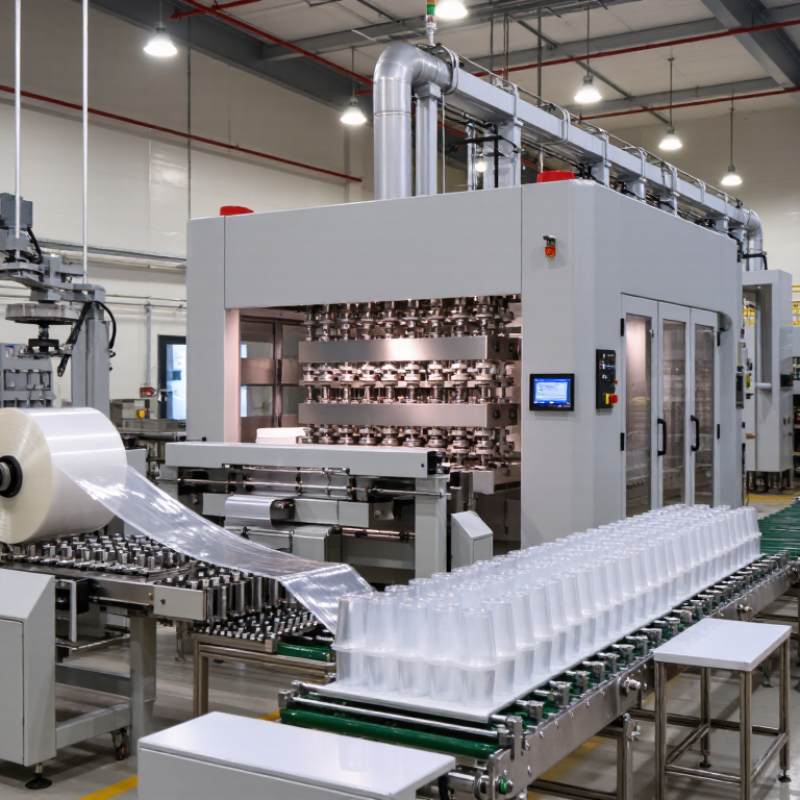
Configuration matters as much as forming method. An inline thermoforming machine can heat, form, trim, and stack cups continuously. Check its heating zones carefully. Uneven temperature may create cloudy walls or weak rims. A rotary system can reduce floor space and support repeated production, but changeovers may feel less convenient. Servo-driven movement can improve timing and reduce wasted material. Still, a well-adjusted pneumatic system may be sufficient for simpler products.
I have seen buyers focus on maximum speed and overlook mold changes. That mistake becomes expensive. Ask for cycle data using your actual cup size, material, and wall thickness. Inspect the trim collection, stacker access, and heater maintenance points. A machine that runs quickly but stops often is not productive. Also review cooling capacity, compressed-air demand, operator access, and spare-part availability. The best configuration is not always the most advanced one. A smaller machine may offer better control during early production, though future capacity can become a problem. Test sample cups under real conditions, including stacking, sealing, and transport. Consider food-contact requirements and documented quality procedures before approving the purchase.