
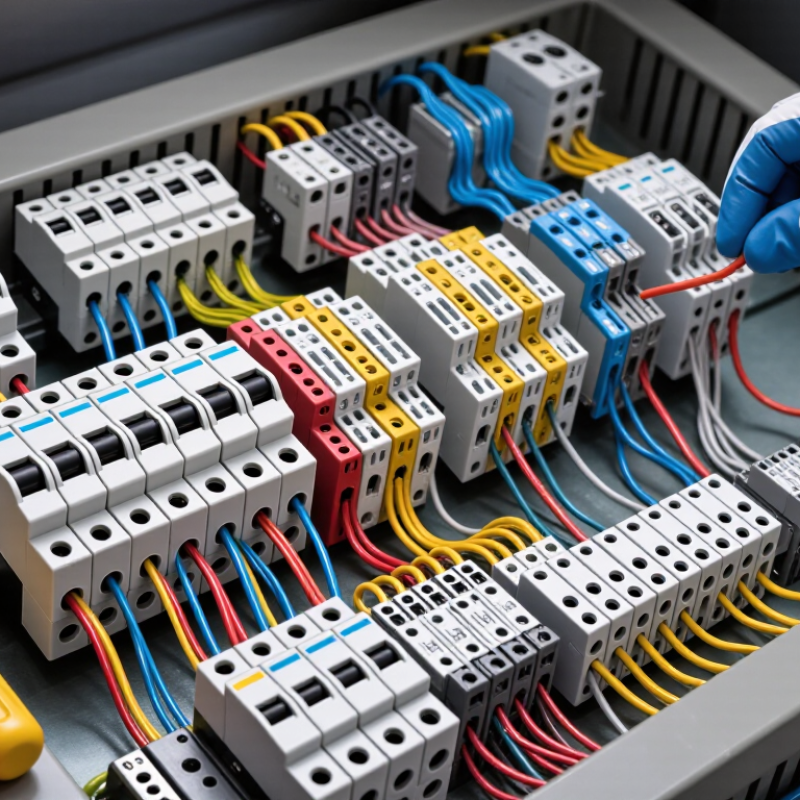
Start with the electrical ratings, not the block’s size. Check the rated voltage and current against the circuit, then confirm the conductor’s wire gauge fits the terminal. A 10-amp load may need more capacity if several circuits share a warm enclosure. Temperature changes the margin. Read the manufacturer’s rating conditions, and avoid treating the printed maximum as a comfortable everyday target.
Pole count should match the number of conductors that need separate connections. A three-pole block can keep three circuits organized, but it does not automatically make them electrically isolated in every arrangement. Check the internal layout and end barriers. Small detail. Leave enough room for the wires to enter cleanly, especially when the panel is crowded.
Connection method affects installation and maintenance. Screw terminals provide a familiar, visible clamping point, but loose or uneven tightening can cause trouble. Spring-clamp and push-in types can speed wiring and resist vibration, provided the conductor type and strip length are correct. I have seen wire preparation treated as an afterthought; it is not. A nicked strand or insulation trapped under the clamp can undermine an otherwise suitable block. Compare the datasheet, inspect a sample if possible, and choose the method your team can install consistently. That choice may be less obvious than it first seems.