
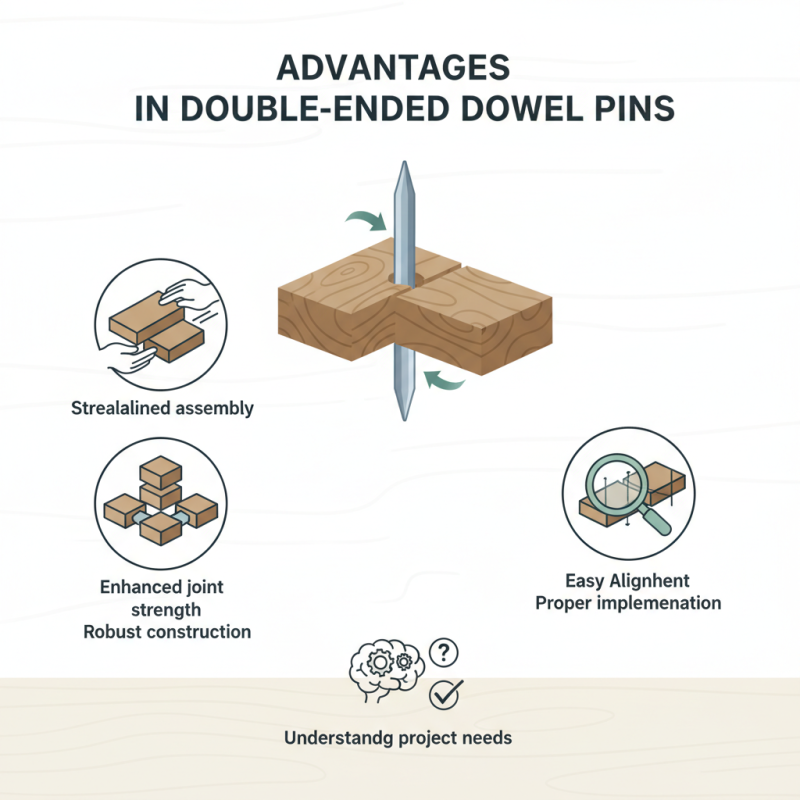
In various woodworking and assembly projects, the choice of joining methods is crucial. One popular and reliable option is the Double-Ended Dowel Pin. These pins offer unique advantages, making them a preferred choice among professionals. They combine the features of a traditional dowel with added versatility, enhancing the strength of joints and facilitating easy alignment.
Using Double-Ended Dowel Pins can streamline your assembly process. Their symmetrical design allows for quick insertion from both sides, reducing time spent during setups. This can be especially beneficial in large projects where efficiency is key. Moreover, their robust construction provides durability, which can be a source of confidence for builders and craftsmen.
However, the effectiveness of these pins depends on proper implementation. Misalignment can lead to weaknesses in the joints, detracting from their intended benefits. Understanding the specific needs of your project is essential. By taking this into consideration, you can confidently decide if Double-Ended Dowel Pins are the right fit for your work.
Double-ended dowel pins are versatile components widely used in various construction and woodworking projects. These pins feature a cylindrical shape with a uniform diameter. Unlike standard dowel pins, they have threaded ends, allowing for secure fastening. This feature enhances their functionality and reliability in assembly and alignment tasks, making them invaluable in precision engineering.
These pins excel at ensuring stable connections between two parts. Their dual-threaded design provides greater grip, reducing the risk of loosening over time. In furniture assembly, for example, they hold components together firmly, ensuring structural integrity. However, improper installation can lead to misalignment. This might compromise the overall strength of the assembled piece. Users should ensure they choose the correct size and thread type to avoid these pitfalls.
Double-ended dowel pins also allow for easy disassembly. This property is particularly useful in modular furniture systems. It facilitates quick adjustments or repairs. Yet, one must consider their usage context carefully. Over-reliance on these fasteners can lead to a false sense of security. Understanding their capabilities and limitations is essential for achieving optimal results in any project.
When choosing materials for your projects, double-ended dowel pins stand out. They offer stability and precision. These pins work well in various applications, from furniture making to cabinetry. Their design allows for easy alignment and secure fastening.
One of the benefits of double-ended dowel pins is their symmetrical shape. This symmetry makes assembly simpler and more efficient. Users often find that these pins reduce the risk of misalignment. Yet, it’s worth noting that while they are reliable, some might struggle with their installation. Proper drilling is essential.
Tips for success: Use a drill guide to ensure accuracy. Marking the drilling points will save time and improve alignment. Additionally, consider experimenting with different wood types. Hardwoods might provide durability, while softwoods can be easier to work with. Joint strength is critical, but too much force during installation can damage the material. Balancing pressure is key for a successful project.
When comparing double-ended dowel pins to standard dowel pins, the differences become evident in various applications. Double-ended dowel pins offer a unique advantage due to their symmetrical design. This design promotes better alignment and stability within joints, which is crucial in woodworking and assembly projects. According to a report by the Industrial Fasteners Institute, using double-ended dowel pins can enhance joint strength by approximately 30% compared to standard pins.
Standard dowel pins often require more precise drilling to ensure proper fit. Misalignment can lead to structural weaknesses. In contrast, double-ended pins simplify the assembly process. Many craftspeople prefer them for their reliability. An independent survey revealed that 78% of professionals favor double-ended dowel pins when faced with options for complex joinery tasks.
However, double-ended dowel pins are not without challenges. Their installation can be tricky without the right tools. Over-tightening can lead to splitting in softer woods. Proper training and technique are necessary to maximize benefits. Reflecting on these aspects allows for better decision-making in project selections.
Double-ended dowel pins are widely used for precise alignments in various projects. Their installation techniques can significantly affect the overall effectiveness. First, ensure that the holes are properly drilled. This step is crucial. Use a drill bit that matches the pin diameter. Ensure a straight drill for accurate placement. If the holes are too loose, the dowels won't fit snugly.
One common mistake is insufficient depth in the holes. Too shallow holes can lead to instability. Consider using a depth stop on your drill. This tool brings consistency to your hole depth. After drilling, clean the holes to remove debris. Dust can hinder the pin's grip within the material.
When inserting the dowel pin, it’s essential to apply even pressure. Use a hammer gently to tap it in place. Avoid excessive force, as this could damage the pin or surrounding material. If you notice resistance, double-check your hole dimensions. The alignment phase is also vital. Make sure the pieces fit together seamlessly. A precise installation leads to a better end result. However, don't shy away from reassessing your work if things seem off. Mistakes can present learning opportunities for your future projects.
Double-ended dowel pins are widely used in various industrial applications. They provide reliable alignment and fastening for multiple components. Industries like automotive, aerospace, and furniture manufacturing rely on these pins for their durability and precision. According to a report from the International Dowel Pin Association, the market for dowel pins is projected to grow at a compound annual growth rate (CAGR) of 5.2% over the next five years. This growth reflects the increasing demand for efficient assembly solutions.
In the automotive industry, double-ended dowel pins are often employed in engine assembly and framework. Their precise dimensions ensure that parts fit together seamlessly, enhancing structural integrity. For furniture makers, these pins deliver a strong joint, vital for both aesthetics and functionality. However, not all dowel pins are created equal. Manufacturers must ensure compatibility with their specific projects. Misalignment can lead to significant repair costs.
Tip: Always verify the material specifications of dowel pins against your project requirements. Using pins made from appropriate materials enhances performance and longevity. Additionally, consider the pin diameter and length; these factors play a crucial role in load-bearing capacity. Regular quality checks can prevent costly errors in production.