
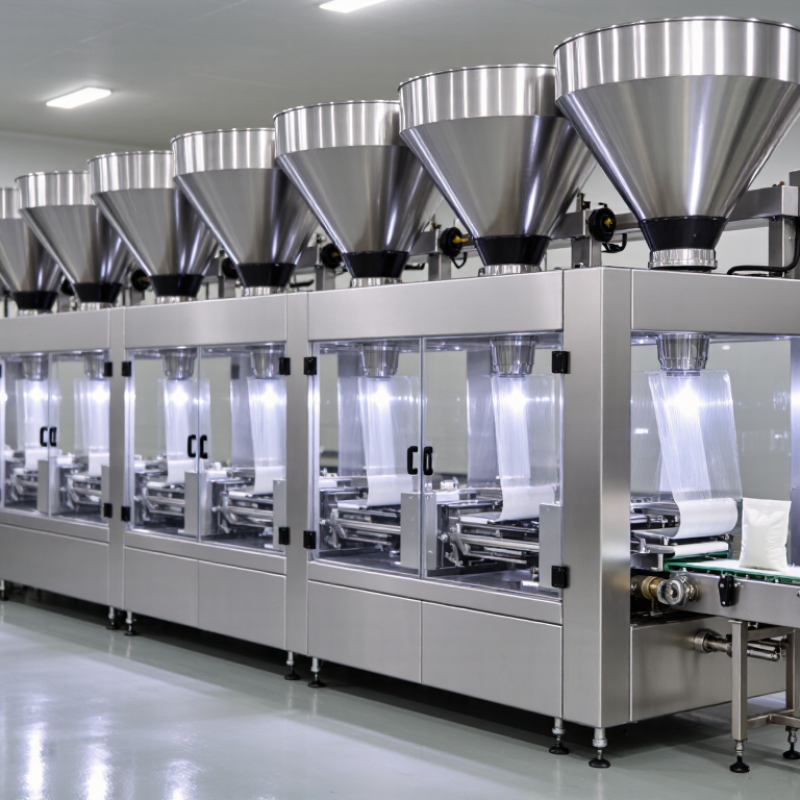
How to Choose China Top Multi Lane Powder Packing Machine?
Understanding Multi-Lane Powder Packing Machine Types
Multi-lane powder packers usually fall into three practical types: stick-pack, sachet, and narrow pouch systems. Stick-pack machines create slim, portable packs with vertical seals. Sachet machines offer wider packs and better space for instructions. Narrow pouch machines handle larger fills and varied powder products. The right choice depends on flowability, density, moisture, and dose accuracy. A free-flowing powder may suit volumetric dosing. Cohesive powder usually needs an auger filler. Augers matter here.
Grand View Research valued the global powder packaging market at about USD 10 billion in 2023. Its report also forecasts steady growth through 2030. This growth supports higher automation, but lane count alone does not guarantee productivity. More lanes can increase output, yet they also multiply sealing adjustments and cleaning points.
PMMI reports that labor shortages remain a major packaging concern among processors. Therefore, servo control, automatic film tracking, and accessible dosing assemblies deserve careful attention. I once assumed twelve lanes were always superior. That assumption ignored maintenance time.
Tips: Request test runs using your actual powder. Check weight variation, dust control, seal strength, and changeover time. Ask for recorded results, not only catalog speed. A machine rated at 600 packs per minute may deliver less with humid powder. Confirm stainless-steel contact parts, guarding, electrical standards, and documentation. Leave room for inspection. Small design details often decide long-term reliability.