
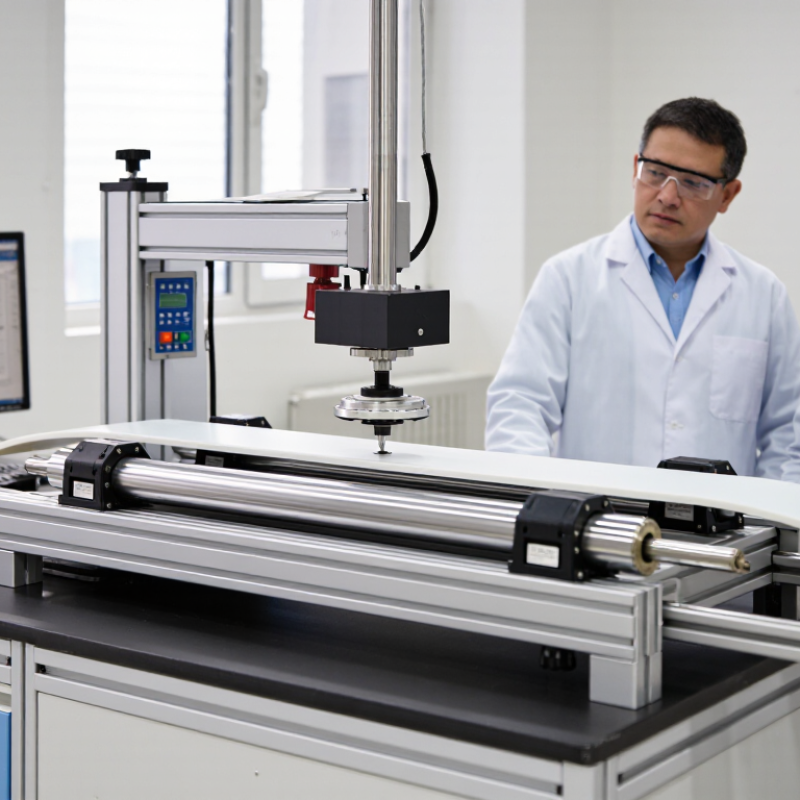
How to Choose a 3 Point Bending Tensile Testing Machine?
Identifying Material, Specimen, and Test Standard Requirements
Choosing a three-point bending machine starts with the material, not the frame size. Plastics, composites, wood, and ceramics respond differently under flexural loading. A polymer may need controlled temperature. A ceramic may need higher stiffness and careful alignment. Calling this a tensile machine can also cause confusion. The specimen is usually bent, while tensile stress develops on its lower surface.
Check the required standard before purchasing equipment. ASTM D790 and ISO 178 commonly guide plastic flexural tests. Ceramic applications may follow different procedures, such as ASTM C1161. Each standard can specify specimen length, width, thickness, support span, loading nose radius, and test speed. A small dimensional error can change the calculated strength. Measure several specimens with a calibrated gauge. Do not rely on nominal drawings alone.
Match the load cell to the expected force range. Excessive capacity can reduce measurement resolution. Insufficient capacity creates a safety and accuracy problem. Confirm the machine can control crosshead speed steadily. Deflection measurement also matters, especially for flexible specimens. Record temperature and humidity when the material is sensitive. Verify calibration records, alignment, software traceability, and emergency stopping functions. In practice, operators sometimes select a fixture first and review the standard later. That approach seems convenient, but it can produce unusable data. A short trial with real specimens may reveal unexpected slipping, crushing, or uneven contact.