
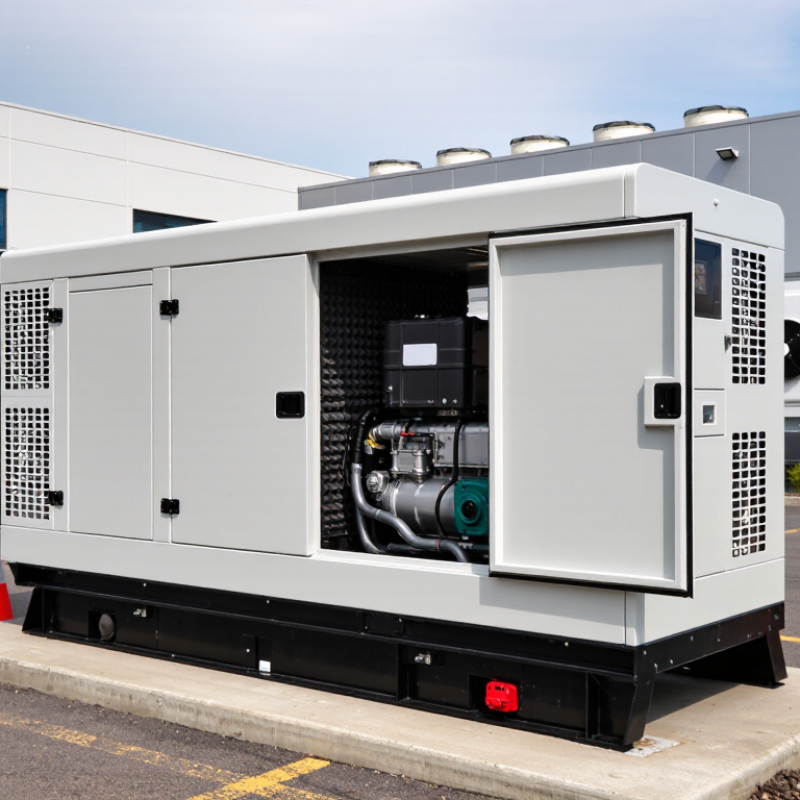
How to Choose the Best Silent Diesel Generator Set?
Verify 50/60 Hz Output and ISO 8528-5 Performance Class
Frequency is a compatibility requirement, not a minor setting. A four-pole alternator typically runs at 1,500 rpm for 50 Hz or 1,800 rpm for 60 Hz. Confirm the required frequency against the site’s equipment and regional supply. Then check that the quoted voltage, phase, and frequency apply at the intended load—not just at no load. A quiet enclosure cannot correct an electrical mismatch.
ISO 8528-5 defines performance classes G1 through G4 for engine-driven generating sets. The classes describe how a set responds to changing loads, including frequency and voltage behavior. G1 suits less demanding loads; G3 is intended for equipment with tighter requirements. G4 covers requirements agreed between buyer and supplier. Specify the class in the purchase documents, and request test results under stated load steps. A class label alone is not proof.
There is a practical reason to examine transient performance. Uptime Institute’s 2024 Annual Outage Analysis reported that 54% of respondents’ most recent significant outages cost more than $100,000; 16% exceeded $1 million. Those figures cover outages broadly, not generator failures specifically. I would avoid treating them as proof that a higher class prevents downtime. Ask how the set performs during motor starts and sudden load changes. The specification can still leave gaps.