
China Best Tank Mixer Manufacturer for Global Buyers?
Choosing the best tank mixer manufacturer in China requires more than comparing prices or motor ratings. Global buyers need evidence of process knowledge, stable production, and dependable after-sales support. MarketsandMarkets’ Mixing Equipment Market report identifies food, chemical, pharmaceutical, and water treatment as major application sectors. These industries demand controlled blending, reliable sealing, and repeatable results.
The details matter.
A suitable tank mixer should match viscosity, batch volume, liquid level, temperature, and solids concentration. A 10,000-liter water tank needs different impeller geometry from a small, high-viscosity resin vessel. Vendor selection should include shaft strength calculations, power-consumption data, material certificates, factory testing, and documented quality procedures. ISO 9001 certification can support quality control, but it does not guarantee excellent mixing performance. That distinction is often overlooked.
China has a broad manufacturing base and strong access to motors, gearboxes, stainless steel, and fabrication services. However, “best” is never universal. A manufacturer experienced in wastewater equipment may not understand pharmaceutical sanitation requirements. Buyers should examine project references, inspection records, spare-parts availability, and response times before signing a contract. The Global Manufacturing Competitiveness Index and UNIDO industrial statistics both underline China’s important manufacturing position, yet national scale alone cannot replace technical verification.
Some uncertainty remains.
Independent testing, pilot trials, and transparent communication can reduce it. The strongest supplier explains limitations clearly, rather than promising perfect results. This guide examines how global buyers can assess Chinese tank mixer manufacturers through engineering capability, compliance awareness, customization quality, and long-term service reliability.
Types of Tank Mixers for Different Industrial Applications
China Best Tank Mixer Manufacturer for Global Buyers?
Types of Tank Mixers for Different Industrial Applications
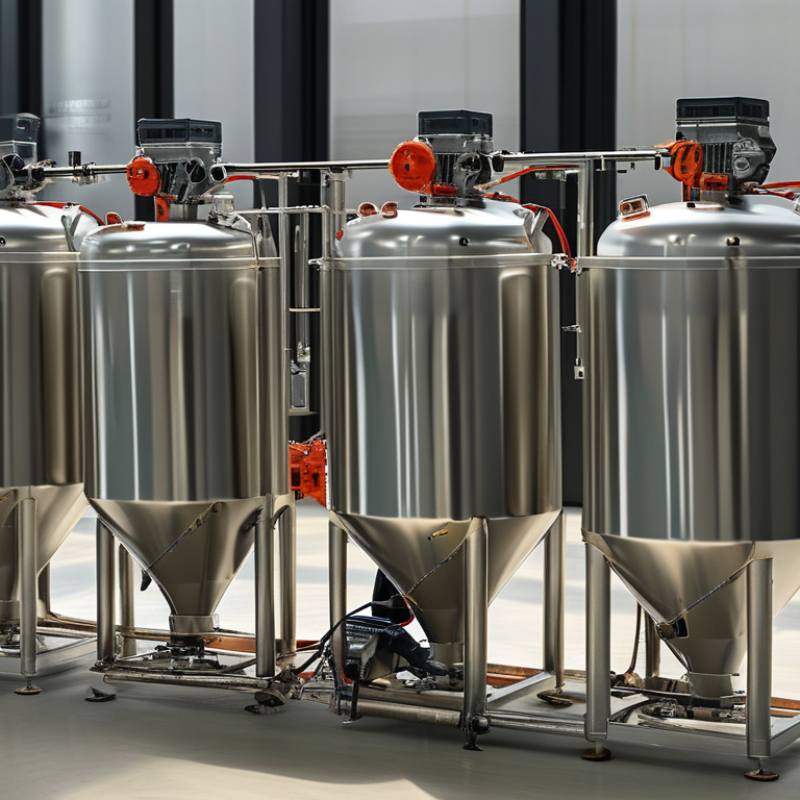
Choosing a tank mixer starts with the material, not the motor size. Low-viscosity liquids often suit top-entry mixers with axial-flow impellers. They create steady circulation across large tanks. Water treatment, blending, and liquid storage commonly use this arrangement.
Side-entry mixers fit horizontal tanks and space-limited vessels. Their angled shaft supports efficient movement near the tank wall. Bottom-entry mixers work well when gentle circulation matters. They are often selected for food, beverage, and pharmaceutical processing. Sealed designs can also reduce contamination risks.
High-shear mixers are different. They generate intense local turbulence for emulsions, dispersions, and powder wetting. A rotor-stator head may break agglomerates quickly, but it can increase heat and energy demand. Static mixers may be better for continuous pipelines, where tanks are not required. Every choice needs checking.
I have seen projects fail because viscosity was measured only at room temperature. Heating can change flow resistance dramatically. A tank may also develop dead zones around coils, corners, or bottom outlets. Impeller diameter, shaft length, baffle layout, and operating speed must be reviewed together. Oversizing is not always safer. It may damage fragile particles and waste power. Test data remains valuable, although small-scale testing cannot reproduce every factory condition. A dependable manufacturer should explain these limits clearly.
China Best Tank Mixer Manufacturer for Global Buyers? - Types of Tank Mixers for Different Industrial Applications
| Mixer Type | Typical Impeller or Mixing Element | Indicative Liquid Viscosity Range | Primary Mixing Action | Suitable Industrial Applications | Key Selection Considerations |
|---|---|---|---|---|---|
| Propeller Mixer | Three-blade or marine-style propeller | Approximately 1–500 mPa·s (cP) | High liquid circulation with relatively low shear | Water treatment chemicals, low-viscosity solvents, detergents, brines, and general liquid blending | Tank geometry, liquid level, rotational speed, vortex control, and the need for baffles |
| Pitched-Blade Turbine Mixer | Four- or six-blade pitched turbine | Approximately 10–10,000 mPa·s (cP) | Combined axial and radial flow for blending and suspension | Chemical solutions, mineral slurries, wastewater treatment, and solid–liquid suspension | Solids concentration, particle settling velocity, impeller diameter, and required suspension quality |
| Radial-Flow Turbine Mixer | Flat-blade turbine or disk turbine | Approximately 1–5,000 mPa·s (cP) | High local shear and strong radial discharge | Gas dispersion, liquid–liquid blending, emulsification support, and chemical reaction vessels | Gas flow rate, dispersion requirements, heat transfer, shear sensitivity, and power input |
| Anchor Mixer | Anchor-shaped wall-sweeping element | Approximately 1,000–100,000 mPa·s (cP) | Low-speed bulk circulation with wall sweeping | Paints, coatings, creams, adhesives, resins, syrups, and viscous food products | Wall clearance, heat-transfer surface, torque demand, scraper requirements, and temperature control |
| Helical Ribbon Mixer | Single or double helical ribbon | Approximately 10,000–1,000,000 mPa·s (cP) | Strong axial movement for very viscous materials | Sealants, silicone compounds, high-viscosity adhesives, polymer products, and heavy pastes | Motor torque, gearbox capacity, batch filling level, discharge design, and cleanability |
| High-Shear Mixer | Rotor–stator head or high-speed dispersing blade | Approximately 1–10,000 mPa·s (cP), depending on design | Intense local shear, particle size reduction, and dispersion | Pigments, inks, cosmetics, pharmaceutical suspensions, emulsions, and powder wet-out | Shear sensitivity, temperature rise, air entrainment, particle size target, and batch volume |
| Magnetic-Coupled Mixer | Internal impeller driven through a magnetic coupling | Commonly used for low- to medium-viscosity liquids | Sealed circulation without a conventional shaft seal | Pharmaceutical liquids, sterile processing, high-purity chemicals, and corrosive fluids | Hygienic design, containment, clean-in-place requirements, magnetic torque limit, and material compatibility |
| Side-Entry Mixer | Propeller or axial-flow impeller mounted through the tank wall | Typically selected for low- to medium-viscosity bulk liquids | Horizontal circulation across large storage tanks | Fuel storage, wastewater equalization, chemical storage, and liquid blending tanks | Tank diameter, nozzle location, seal arrangement, corrosion resistance, and minimum operating level |
Note: Viscosity ranges are indicative engineering guidelines only. Final mixer selection should be based on tank dimensions, fluid rheology, density, solids content, temperature, batch volume, mixing time, and required process performance.
Related Posts
-
Top 5 Tank Mixers to Boost Your Efficiency in 2025
-
2025 How to Choose the Right Tank Mixer for Your Industrial Needs
-
Top 10 Tank Mixers to Discover at the 139th Canton Fair?
-
Top Tips for Choosing the Right Tank Mixer for Your Needs
-
How to Choose the Right Tank Mixer for Your Industrial Needs
-

Essential Tank Mixer Guide: Mastering Mixing Techniques for Optimal Results