2026 Best Metering Pump Choices for Global Buyers?

The market for metering pumps is rapidly evolving, driven by diverse industry needs. According to a recent report by MarketsandMarkets, the global metering pump market is projected to reach USD 6.55 billion by 2026. This growth is fueled by increasing demand for precise flow control across various sectors, including water treatment and chemical manufacturing.

Selecting the right metering pump can be challenging. Different applications require specific pump designs, materials, and technologies. For instance, diaphragm pumps provide high accuracy, while peristaltic pumps offer flexibility in handling different fluids. Each type has its advantages and limitations, creating a need for informed decision-making. Buyers must reflect on their unique requirements and how each solution aligns with their operational goals.

The landscape of metering pumps is influenced by advancements in technology. Smart metering solutions are gaining traction, offering improved monitoring and control capabilities. However, more advanced systems can also come with their set of complexities. Thus, buyers should carefully consider the trade-offs between innovation and reliability in their choice of metering pump to ensure long-term efficiency and performance.

2026 Best Metering Pump Choices for Global Buyers?

Overview of Metering Pumps: Types and Applications

Metering pumps play a vital role in various industries. They deliver precise amounts of fluids under controlled conditions. These pumps are essential in processes that require accuracy and reliability. There are several types of metering pumps, each serving specific applications.

Positive displacement pumps provide a constant flow rate. They are common in chemical dosing and water treatment. Another type is the diaphragm pump. This design minimizes leaks and is suitable for hazardous liquids. Additionally, peristaltic pumps are ideal for transferring sensitive fluids. They are often used in food and pharmaceutical sectors where contamination is a concern.

Applications of metering pumps span multiple fields. In agriculture, they are used for fertilizer injection. In the oil and gas industry, they manage chemical additives. Water treatment facilities rely on metering pumps for chlorine dosing. Despite their importance, users may overlook maintenance needs. Regular checks are essential to ensure optimal performance. Proper installation is equally crucial to preventing system failures. Improved understanding of these factors can enhance operational efficiency.
2026 Best Metering Pump Choices for Global Buyers

This chart illustrates the projected market share of different types of metering pumps for the year 2026, focusing on various applications. The types include diaphragm pumps, peristaltic pumps, gear pumps, and piston pumps, which are widely used across industries such as water treatment, chemical processing, and food and beverage.

Key Factors to Consider When Selecting a Metering Pump

2026 Best Metering Pump Choices for Global Buyers?

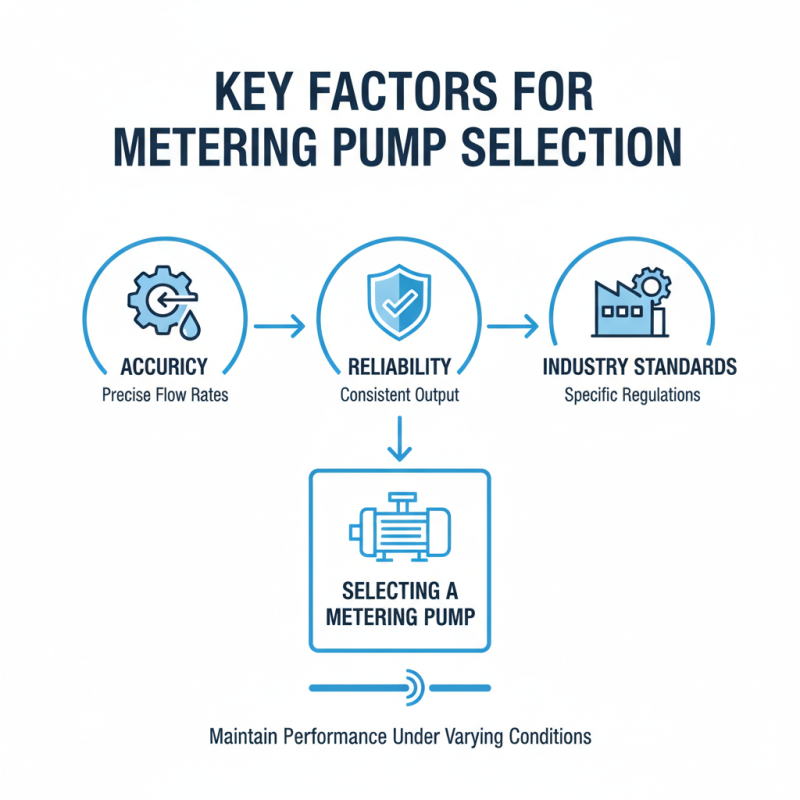
When selecting a metering pump, buyers must consider several factors. The pump's accuracy is crucial in applications requiring precise flow rates. Users need reliable pumps that maintain consistent output under varying conditions. Different industries have specific standards, which can influence the selection process.

Pumping medium characteristics play a significant role. The nature of the fluid—viscous, corrosive, or abrasive—requires different pump materials and designs. Additionally, the flow rate and pressure specifications must align with the process requirements. Buyers should analyze operational efficiency too. An inefficient pump can lead to increased energy costs and reduced productivity.

Installation and maintenance should not be overlooked. A complicated setup can increase downtime. Regular maintenance schedules ensure longevity and performance. Users might hesitate when facing complex systems. Choosing simpler designs often leads to better outcomes. Balancing these elements is essential for making the right choice.

Top Metering Pump Brands for Global Buyers in 2026

In 2026, choosing the right metering pump is crucial for industrial operations. It’s essential to consider aspects like flow accuracy, safety standards, and maintenance requirements. Various brands excel in different features, catering to diverse applications. Look for pumps that offer easy calibration and reliability. These factors contribute to effective fluid management.

The metering pumps on the market vary significantly. Many buyers focus on energy efficiency and durability. However, not all manufacturers guarantee long-term performance. It’s important to research product specifications and user reviews thoroughly. Some users face issues with fluctuating pressures, which can disrupt processes. Engaging with industry forums can provide insights into common challenges.

Technical support is another key point. Brands that provide comprehensive after-sales service tend to build better customer loyalty. Checking warranty terms and responsiveness can save future headaches. Overall, the best choices depend not only on performance but also on support. Balancing price with quality often leads to better outcomes in metering pump selection.

Comparative Analysis of Metering Pump Performance Metrics

Metering pumps are critical in various industries, ensuring precise fluid transfer. When evaluating their performance, several metrics come into play. These include flow rate accuracy, pressure stability, and response time. A pump that excels in these areas can significantly impact production efficiency.

In a recent comparative analysis, discrepancies in pump performances were evident. Some pumps achieved high flow rates but struggled with pressure consistency. Others boasted excellent response times but lacked accuracy at lower flow rates. Choosing the right metering pump requires careful consideration of these metrics. A nuanced understanding aids in selecting the most suitable options, especially for specialized applications.

Additionally, material compatibility and environmental factors cannot be overlooked. Different fluids may react differently with pump materials. Impacts on longevity and safety should always be evaluated. These reflections prompt deeper insights into optimizing pump selection, ultimately driving operational success.

Future Trends in Metering Pump Technology and Innovation

The metering pump industry is undergoing significant transformations as technology advances. Recent reports indicate that the global market is expected to grow from $3.5 billion in 2021 to $5.8 billion by 2026. This twofold increase highlights the increasing demand for efficient fluid transfer solutions across industries.

Innovative technologies are shaping the future of metering pumps. Smart metering pumps integrated with IoT capabilities are becoming common. These pumps allow remote monitoring and control, improving efficiency and reducing downtime. Data shows that such smart systems can enhance operational efficiency by up to 30%. However, the reliance on technology raises concerns about cybersecurity, which must be addressed to maintain trust.

Another significant trend is the adoption of sustainable materials and designs. The industry is looking to reduce its carbon footprint while enhancing performance. Biocompatible materials are gaining popularity, especially in sectors like pharmaceuticals and food processing. Nonetheless, sourcing these materials often presents challenges. The need for balance between sustainability and efficiency often leads to difficult choices. Manufacturers must navigate these complexities to thrive in a competitive landscape.