
2026 Best Industrial Talc Powder Suppliers for Global Buyers

Choosing an Industrial Talc Powder supplier in 2026 involves more than comparing quoted prices. Buyers need consistent mineral quality, dependable documentation, and delivery terms that fit their production schedules. A fine white powder may look suitable in a sample, yet perform differently in plastics, coatings, ceramics, or paper. Details matter.

This guide introduces suppliers serving international markets and the factors buyers can use to assess them. Compare particle-size specifications, brightness, moisture limits, packaging options, and batch-to-batch consistency. Ask for current technical data sheets and certificates of analysis, then check whether the stated values match your application requirements. Where possible, test a representative sample in your own process. A supplier’s published specification is useful, but it cannot replace a production trial.

Global sourcing adds practical questions. Can the supplier support traceability, communicate clearly, and provide realistic lead times? Clarify order quantities, export packaging, shipping arrangements, and how quality concerns are handled before placing a large order. Not every grade fits. Nor does every low price stay low after freight, delays, or rework.

No single supplier is best for every buyer. Requirements differ by industry, location, volume, and processing method, and supplier capabilities can change. Treat any shortlist as a starting point, verify current claims directly, and weigh evidence against your own technical and commercial needs. A careful review takes time. It may still miss something.
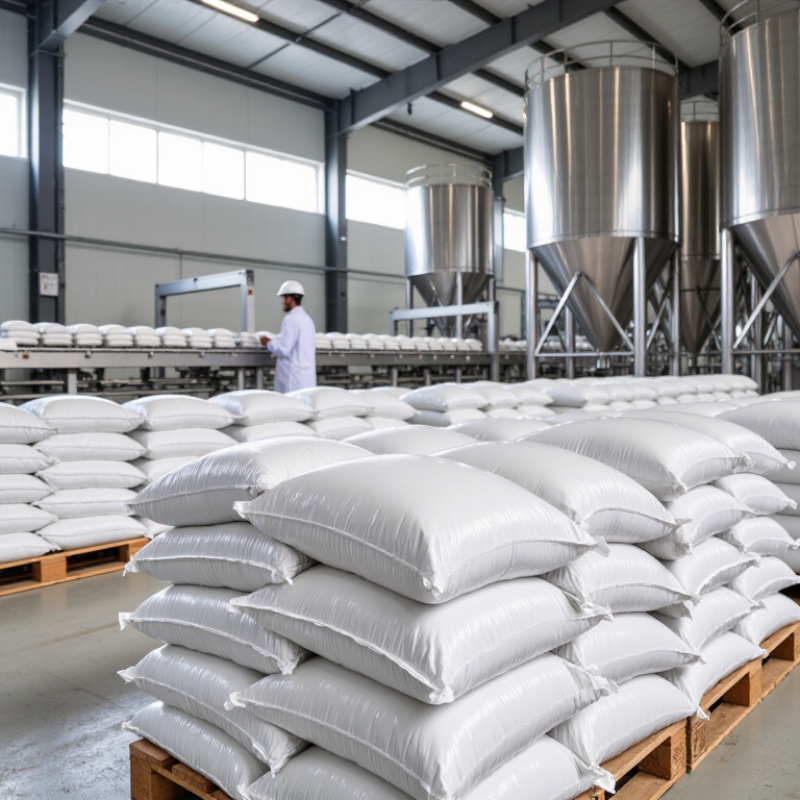
2026 Best Industrial Talc Powder Suppliers for Global Buyers

Industrial Talc Powder: Uses, Properties, and Market Overview

Industrial talc is valued for its soft, platy particles, low hardness, and water-repelling surface. In polypropylene parts, fine talc can improve stiffness and reduce warping; in paints, it can support smooth application and help control settling. Ceramic producers use talc to adjust firing behavior. Results depend on particle size, mineral purity, and how evenly powder disperses. A sample that looks clean may still perform poorly in a production line.

The USGS Mineral Commodity Summaries 2024 estimated global talc mine output at 7.6 million metric tons in 2023. That scale reflects demand across plastics, ceramics, coatings, paper, and other sectors, but it does not show how much material meets a buyer’s specification. Buyers should compare whiteness, moisture, particle-size distribution, and batch consistency, then test the powder in their actual process. Ask for a technical data sheet and a recent certificate of analysis. Check them against incoming-lot results. One caveat: published market totals rarely distinguish industrial grades from other talc products, so they are a rough guide, not a sourcing forecast.

Talc Grades and Specifications for Industrial Applications

Industrial talc grades should be selected by application, not by price or whiteness alone. For plastics, check particle-size distribution, moisture, and mineral purity. A consistent fine powder can improve surface finish and processing, but overly coarse particles may create visible specks. For paints and coatings, brightness, oil absorption, and dispersion behavior deserve close review. Ceramic users may prioritize chemistry, particle size, and firing performance. Specifications vary by process, so compare test methods as well as reported values.

Ask suppliers for a current technical data sheet and batch-specific certificate of analysis. Check how particle size is measured, since laser and sieve results may not be directly comparable. Confirm packaging, moisture limits, and sample availability before approving a shipment. A specification sheet is useful, but it cannot fully predict behavior on your production line. Run a small trial. Results can still surprise you.

Tips: Match each requested limit to a real production need. Record the grade, test method, and batch number during trials. If a result seems unusually favorable, ask for repeat testing or an independent laboratory check. Small details matter.

How to Evaluate Industrial Talc Powder Suppliers

Evaluating an industrial talc powder supplier starts with matching the grade to the process. Ask for particle-size distribution, whiteness, moisture, and mineral composition data. Compare these figures with your production limits, not just a catalogue description. A powder that looks fine in a sample jar may behave differently in a coating line or polymer mixer.

Check whether each batch comes with a certificate of analysis and clear lot identification. Compare results across several shipments, especially for brightness and particle size. Request a representative sample from a current production lot, then test it using your own equipment. Small differences can affect flow, surface finish, or dispersion. A clean sample is not proof of steady supply. Batch variation deserves attention.

Reliable suppliers can explain their quality checks, packaging controls, and source documentation without vague answers. Ask how sealed bags or bulk loads are protected from moisture and contamination during storage and transport. A useful technical contact should discuss handling details, such as dust collection and feeding behavior, rather than simply promise “high quality.” Paperwork may look polished; real production can still expose gaps. That possibility is worth considering before placing a large order. Start with a trial quantity and record the results under normal operating conditions.

Global Sourcing, Quality Standards, and Shipping Considerations

Global talc sourcing begins with origin, not the lowest quotation. The USGS Mineral Commodity Summaries 2025 reports mine production by country, helping buyers compare source regions rather than treating supply as interchangeable. Ask where the ore was mined and processed. Request a recent certificate of analysis for each lot, including mineral composition, particle-size distribution, brightness, and moisture. Compare D50 and D97 values with your own process requirements; a matching headline grade may still behave differently on the production line. Keep a retained sample. It can help resolve disputes, though it cannot prevent every variation.

Shipping needs equal scrutiny. UNCTAD’s Review of Maritime Transport 2024 reports that seaborne trade grew 2.4% in 2023, while route disruptions and schedule changes continued to challenge supply chains. Build lead-time buffers into contracts. Confirm bag type, pallet protection, container loading, and moisture controls before dispatch; damp packaging can turn fine powder into costly lumps. Request photos of loading and clear lot identification. Small details matter. Still, a checklist is not a guarantee: test an initial shipment at your facility before committing to repeat volumes.

2026 Best Industrial Talc Powder Suppliers for Global Buyers - Global Sourcing, Quality Standards, and Shipping Considerations Supplier-neutral sourcing guide. Producing-country examples are not rankings, and product availability and specifications must be confirmed with each supplier.
Sourcing Area or Evaluation Dimension Relevant Facts What Buyers Should Compare Quality Evidence to Request Shipping and Commercial Considerations
China China is an established talc-producing country. Industrial material can vary by deposit, processing route, and intended application. Confirm the actual mine or processing origin, intended-use grade, monthly capacity, and consistency between sample and production lots. Lot-specific certificate of analysis (COA), safety data sheet (SDS), particle-size distribution, whiteness method, and mineralogical or contaminant data relevant to the application. Compare port of loading, export documentation, packaging, moisture protection, and quoted Incoterms. Check destination-country import requirements before ordering.
India India is an established talc-producing country. Deposit characteristics and finished-powder properties are not uniform across suppliers. Compare grade suitability, particle-size control, order minimums, production lead time, and the supplier’s process for handling specification changes. Request representative samples and COAs from multiple production lots; agree in writing on test methods, tolerances, and acceptance procedures. Confirm whether the price includes inland transport, export handling, and ocean freight. Review bag type, palletization, container loading, and transit insurance.
Brazil Brazil is an established talc-producing country. Regional supply options should be verified against the buyer’s required grade and volume. Assess available production capacity, grade range, product traceability, and the supplier’s ability to provide recurring shipments. Request a product specification sheet, lot-specific COA, SDS, and evidence that testing is performed using agreed methods. Evaluate inland distance to port, shipment frequency, container availability, packing format, and total landed cost rather than unit price alone.
United States The United States is an established talc-producing country. Domestic and export availability depends on the producer, deposit, and product grade. Compare domestic delivery options or export capability, technical support, available grades, and documented quality controls. Request current technical data, SDS, traceability details, and test results for the specific lot and end-use requirements. For domestic purchases, compare freight distance and delivery terms. For exports, confirm port routing, export documents, and destination compliance.
European sourcing (including Finland and France) Finland and France are among the European countries associated with talc production. A European origin does not by itself guarantee a particular grade or specification. Confirm country and site of origin, product grade, supply continuity, and whether the material meets the buyer’s applicable regional regulations. Request a lot-specific COA and SDS, plus documentation supporting applicable chemical, workplace-safety, and end-use requirements. Compare road, rail, and sea options where available. Confirm delivery terms, packaging, and any customs or regulatory documentation required for the destination.
Mineral identity and composition Talc is a magnesium silicate hydroxide mineral, commonly represented as Mg3Si4O10(OH)2. Natural deposits may contain other minerals. Set application-specific limits for mineral composition and relevant impurities instead of assuming that all products sold as talc are equivalent. For extender specifications, ISO 3262-10 covers natural talc/chlorite. Request suitable mineralogical analysis and any required contaminant testing. Ensure the product description and documentation match the declared material and the import rules applicable in the destination market.
Particle size and fineness Particle-size requirements depend on the end use; there is no single particle-size distribution suitable for every industrial application. Specify the measurement basis, such as D10, D50, and D90, and whether results are measured by laser diffraction, sieving, or another agreed method. ISO 13320 describes laser-diffraction methods for particle-size analysis. Ask for the method, dispersion conditions, and lot-specific results. Confirm that the exported grade and production lot match the approved sample; handling and packaging should limit contamination and moisture exposure.
Whiteness, moisture, and application properties These properties vary with mineral source, processing, and test method. Values from different methods may not be directly comparable. Define the required test method and acceptable range for whiteness, moisture, pH, oil absorption, or other application-critical properties. Use an agreed specification and request the actual method and lot result. ASTM D281 is a test method for oil absorption of pigments; confirm suitability for the product and application. State packaging and storage requirements in the purchase contract, particularly protection from water, odors, and cross-contamination.
Safety, contaminants, and compliance Natural mineral products require evaluation for hazards and contaminants relevant to the source, process, end use, and destination jurisdiction. Identify applicable workplace, product, and import rules. Do not rely on a general claim or a prior lot’s results for a new source or shipment. Request a current SDS and suitable, lot-relevant test documentation for regulated or application-critical contaminants, including asbestos where required. Check destination-country labeling, declarations, and customs documentation before shipment. Regulatory obligations vary by jurisdiction and use.
Packaging and transport Powdered talc may be supplied in bags, big bags, or bulk formats, depending on supplier capability and buyer requirements. Compare net weight, liner and closure, pallet configuration, handling equipment needs, and packaging suitability for the buyer’s facility. Agree on packaging cleanliness, identification, lot coding, and retained-sample procedures in the purchase specification. Confirm container loading plan, cargo protection, shipment documents, insurance responsibility, and Incoterms. HS classification should be verified for the exact product and destination.
Supplier qualification and landed cost Supplier capability cannot be established from country of origin alone; audits, sample testing, and contractual controls help evaluate supply risk. Compare total landed cost, capacity, lead time, minimum order quantity, payment terms, change-control process, and performance history. Approve a production sample, define incoming inspection and rejection criteria, and require advance notice of changes to source, process, or specification. Calculate product price, inland freight, export charges, ocean or air freight, insurance, duties, port fees, and final delivery as separate cost components.
All specifications, test methods, regulatory documents, origin statements, and freight terms should be verified for the particular product, supplier, shipment, end use, and destination market. This table is a general sourcing framework, not a supplier ranking or product certification.

Comparing Supplier Capabilities for 2026 Purchasing Needs

For 2026 purchasing, compare industrial talc suppliers by how clearly they define product consistency, not just price per tonne. Ask for recent specifications covering particle-size distribution, brightness, moisture, and mineral composition. A fine powder may suit one process but create dust-control or handling issues in another. Small details matter. Request a representative sample and test it using your own production settings before approving a regular shipment.

Supplier capability also shows in documentation and communication. Check whether each lot can be linked to a certificate of analysis, and ask how the supplier manages changes in source or processing. Confirm available packaging, pallet configuration, lead times, and monthly capacity against your actual demand. A polished brochure is not a production plan. Compare responses to the same questions, then record any gaps; vague answers about test methods deserve follow-up. I would not assume that a supplier with the largest capacity offers the best fit. Even a capable supplier can miss a practical requirement, and buyers sometimes overlook their own storage or feeding limits. Discuss those constraints early, including how moisture-sensitive handling and delivery schedules affect your plant.